Rhinoplasty Recovery Timeline: What to Expect Week by Week
Rhinoplasty Recovery Timeline: What to Expect Week by Week
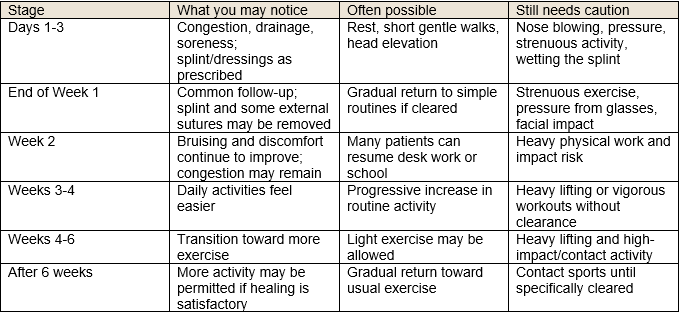
Rhinoplasty recovery is more than waiting for swelling to settle. Each stage brings practical changes: protecting the splint, managing congestion, sleeping and showering safely, returning to work, and then resuming exercise, glasses, sun exposure and travel. A week-by-week plan helps patients understand what is usually restricted and what can gradually return.
What is the typical rhinoplasty recovery timeline?
The first week usually focuses on rest, splint protection and early follow-up. Many patients gradually return to desk work and social routines over the next one to two weeks, then increase physical activity in stages. Exact timing varies by procedure, healing and surgeon instructions, so the milestones below should be treated as approximate.
What should I expect during the first few days after rhinoplasty?
The first few days are mainly about protecting the nose and controlling discomfort rather than testing your appearance or activity level. Congestion can occur from tissue swelling or internal splints, and small amounts of mucus or old blood may drain. Rest, head elevation and prescribed wound and medication instructions are usually emphasized.
What about breathing and congestion?
Nasal blockage is common early because the lining is swollen and internal splints may be present. Avoid blowing your nose until your surgeon allows it, and sneeze or cough with your mouth open. Severe or suddenly worsening breathing difficulty, uncontrolled bleeding or other concerning symptoms should prompt a call to your surgical team.
How should I sleep after rhinoplasty?
Head elevation is commonly recommended during early recovery to reduce bleeding and swelling. Avoid direct pressure on the nose and use the sleeping position your surgeon recommends. There is no single duration that applies to everyone, because the extent of surgery and individual healing determine how long extra precautions are useful.
What happens in week one, and when are the splint and stitches removed?
Week one is usually the main protection and early follow-up phase. Mayo Clinic says an external splint is commonly kept in place for about a week, while Cleveland Clinic notes that external skin sutures used in some open rhinoplasty procedures may be removed after four to seven days. Your surgeon determines the actual timing.
Are all rhinoplasty stitches removed?
No. Some internal sutures are absorbable, while external sutures from certain open approaches may need office removal. Do not pull a loose thread, tape or splint yourself. What looks ready to come off may still be supporting a healing incision or nasal structure.
When can I shower?
While nasal bandages are in place, Mayo Clinic recommends bathing rather than showering so the dressings stay dry. After the splint is removed, face and hair washing instructions vary. Avoid rubbing the nose or directing strong water pressure at it until your surgeon says normal washing is safe.
When can I return to work or school after rhinoplasty?
Many patients plan about a week away from work or school, while Cleveland Clinic describes a typical return within one to two weeks. Desk work is usually easier to resume than a physically demanding job. Readiness depends on comfort, bruising, job requirements, commuting and whether your surgeon is satisfied with early healing.
What if my job is physically demanding?
Jobs involving lifting, repeated bending, strenuous movement or a risk of facial impact generally require more recovery time than desk work. Feeling well enough to answer emails does not mean the nasal bones, cartilage and incisions are ready for heavy physical demands.
When can I exercise or go back to the gym after rhinoplasty?
Exercise returns in stages rather than on one universal date. Cleveland Clinic says light exercise may resume around four to six weeks and advises avoiding heavy lifting during that period. ASPS materials recommend longer caution with strenuous workouts and contact sports because healing nasal bones and cartilage remain vulnerable to impact.
What about walking?
Gentle walking is different from running or resistance training. Light movement is often encouraged as recovery allows, but activities that sharply raise heart rate or require straining are delayed. Stop and contact your surgeon if activity triggers fresh bleeding, increasing pain or a sudden change in symptoms.
What about contact sports?
Any sport with a meaningful chance of a direct blow to the nose requires more caution than noncontact exercise. Return depends on bone and cartilage healing and the exact procedure performed. Get explicit clearance from your surgeon before restarting contact or collision sports.
When can I wear glasses after rhinoplasty?
If eyeglasses rest on the nasal bridge, early pressure should be avoided. Mayo Clinic advises not resting eyeglasses or sunglasses directly on the nose for at least four weeks and suggests alternatives such as taping glasses to the forehead or using cheek supports until the nose has healed enough for normal wear.
Is the four-week rule the same for everyone?
No. The amount of nasal bone work and the way the bones were stabilized can change how long pressure should be avoided. Treat four weeks as a general Mayo Clinic benchmark, not automatic clearance. Your surgeon may recommend a longer period for your specific operation.
How should I protect my nose from the sun after rhinoplasty?
Sun protection matters during healing because postoperative skin can be more prone to discoloration. Mayo Clinic recommends SPF 30 sunscreen outdoors, particularly on the nose, and Cleveland Clinic advises minimizing sun exposure. Limit prolonged direct sun and follow your surgeon’s instructions about when sunscreen or other skin products can be applied.
Is sunscreen enough?
Sunscreen is one part of protection, not a substitute for limiting direct exposure. Shade and an appropriate hat can help if they do not place pressure on the nose. If you still have incisions, tape or dressings, ask your surgeon before applying products over or near them.
When can I fly or travel after rhinoplasty?
The major references used for this article do not provide one universal safe interval for flying after rhinoplasty, so a fixed week should not be presented as appropriate for everyone. Early travel can interfere with follow-up, and long flights add postoperative mobility considerations. Discuss planned travel with your surgeon before booking, especially international trips.
What should I consider before a flight?
Ask whether your splint or sutures need removal first, whether an early follow-up is required, what to do if bleeding or congestion occurs away from the clinic, and how long the journey is. ASPS cautions that combining surgery with travel requires planning because both surgery and long flights can increase clot-related risk.
When does nasal breathing improve after rhinoplasty?
Congestion and reduced nasal airflow are common early because the internal lining is swollen and splints may be present. Breathing generally improves as splints are removed and tissues settle, but timing depends on whether surgery was cosmetic only or also included septal or functional work. Do not self-treat with decongestants unless approved.
Should I blow my nose to clear congestion?
Not during early recovery unless your surgeon specifically allows it. Mayo Clinic and Cleveland Clinic advise avoiding nose blowing after rhinoplasty. Your surgeon may prescribe saline or another method of nasal care; use only the technique and products you were given.
When is congestion concerning?
Expected congestion should gradually improve. Severe or worsening breathing difficulty, heavy bleeding, increasing pain, fever or unusual drainage deserves medical review rather than waiting for the next routine appointment. Your surgeon can distinguish normal postoperative blockage from a problem that needs treatment.
When should I call my surgeon during rhinoplasty recovery?
Contact your surgeon when recovery is moving in the wrong direction rather than gradually improving, especially with heavy or persistent bleeding, worsening pain, fever, unusual drainage, concerning skin changes, severe breathing difficulty or direct trauma to the nose. Your surgeon’s own warning signs and emergency instructions always take priority over a general recovery guide.
What if I accidentally bump my nose?
Do not press, straighten or repeatedly check the nose yourself. Contact your surgeon and describe when the impact occurred, how forceful it was and whether new bleeding, shape change or breathing difficulty followed. An examination may be appropriate even if the nose initially appears stable.
Dr. Mohamed El Assal – Expertise
Dr. Mohamed El Assal's surgical philosophy reflects a firm commitment to natural, harmonious outcomes. Every intervention is designed according to the individual patient's anatomy and realistic goals, with paramount importance placed on preserving function and natural facial expression. His international training in Preservation Rhinoplasty and Deep Plane Facelift techniques supports the achievement of stable, natural long-term results — free from generic templates and one-size-fits-all solutions.
Frequently Asked Questions
When is the nasal splint removed after rhinoplasty?
An external splint commonly stays on for about a week, although timing varies by technique and stabilization. Mayo Clinic describes about one week, while Cleveland Clinic notes splints may be worn for one to two weeks in some cases. Do not remove it yourself; your surgeon decides when it is safe.
When can I shower after rhinoplasty?
While a splint or nasal bandages are in place, the priority is keeping them dry. Mayo Clinic recommends bathing rather than showering during this period. After removal, ask your surgeon about washing your face and hair, and avoid rubbing the nose or directing strong water pressure onto healing tissues.
When can I return to work after rhinoplasty?
Many patients plan about one week off, and Cleveland Clinic says return to work or school is often possible within one to two weeks. Physical jobs or work with facial-impact risk may require longer. The right timing depends on your job, comfort, commute and your surgeon’s assessment.
When can I go back to the gym after rhinoplasty?
There is no single date for every type of exercise. Cleveland Clinic says light exercise may be possible around four to six weeks, while heavy lifting should be avoided during that period. Strenuous or contact activity requires individualized clearance because protecting healing bone and cartilage is more important than returning quickly.
When can I wear glasses after rhinoplasty?
Mayo Clinic advises avoiding direct pressure from eyeglasses or sunglasses on the nasal bridge for at least four weeks. Your surgeon may suggest taping glasses to the forehead or using cheek supports, and may extend the restriction depending on bone work, stabilization and your individual healing progress.
Is nasal congestion normal after rhinoplasty?
Yes. Early congestion is common because the nasal lining is swollen and internal splints may be present. It should gradually improve, and nose blowing is usually avoided until your surgeon allows it. Severe worsening blockage, heavy bleeding, fever or unusual drainage should be discussed promptly with your surgical team.
How is recovery followed with Dr. Mohamed El Assal?
Rhinoplasty follow-up should reflect what was actually done inside the nose, not an internet calendar alone. Visits assess the splint, sutures, incisions, breathing and tissue stability, then guide the return to work, exercise, glasses and travel. The goal is a safe recovery that protects both nasal function and the surgical plan.
CTA: Planning rhinoplasty or unsure about your current recovery stage? Schedule a consultation or follow-up with Dr. Mohamed El Assal, Consultant Plastic Surgeon, for guidance tailored to your procedure and healing.
Suggested Internal Links: Rhinoplasty service page - Nose Swelling After Rhinoplasty - Final Rhinoplasty Results - Revision Rhinoplasty - future article on breathing difficulty after rhinoplasty.
References
Mayo Clinic. Rhinoplasty. https://www.mayoclinic.org/tests-procedures/rhinoplasty/about/pac-20384532
Cleveland Clinic. Rhinoplasty (Nose Job): Surgery, Recovery, Before & After. https://my.clevelandclinic.org/health/treatments/11011-rhinoplasty
Cleveland Clinic. Cosmetic Nose Surgery: Rhinoplasty. https://my.clevelandclinic.org/cosmetic-plastic-surgery/procedures/rhinoplasty-nose-surgery
American Society of Plastic Surgeons (ASPS). Rhinoplasty Recovery. https://www.plasticsurgery.org/cosmetic-procedures/rhinoplasty/recovery
American Society of Plastic Surgeons (ASPS). What to expect from your rhinoplasty recovery. https://www.plasticsurgery.org/news/articles/what-to-expect-from-your-rhinoplasty-recovery
Şeneldir S. Photographic Atlas of Rhinoplasty. Springer; 2021. (Supporting anatomical and postoperative reference.)
Medically reviewed by Dr. Mohamed El Assal, Consultant Plastic Surgeon | Last updated: September 20, 2026