Nose Swelling After Rhinoplasty: When Does It Go Away?
Rhinoplasty swelling timeline
nose tip swelling after rhinoplasty
how long does swelling last after rhinoplasty;
final rhinoplasty results
how long does swelling last after rhinoplasty;
final rhinoplasty results
Nose Swelling After Rhinoplasty: When Does It Go Away?
Nose swelling after rhinoplasty is an expected part of healing, but it does not disappear all at once. Many patients notice a substantial change during the first few weeks, while smaller amounts of swelling—particularly around the nasal tip—can continue to settle for months.
For that reason, the appearance of the nose soon after surgery should not be treated as the final result. Recovery varies with skin thickness, the type and extent of surgery, whether the procedure is primary or revision rhinoplasty, and each patient’s healing response.
Why Does the Nose Swell After Rhinoplasty?
Rhinoplasty creates a normal inflammatory response in the operated tissues. Temporary fluid accumulation and tissue swelling can make the nose look wider, larger, or less defined. The distribution of swelling depends partly on which areas were treated during surgery.
How Long Does Swelling Last After Rhinoplasty?
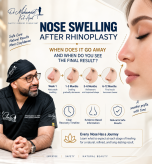
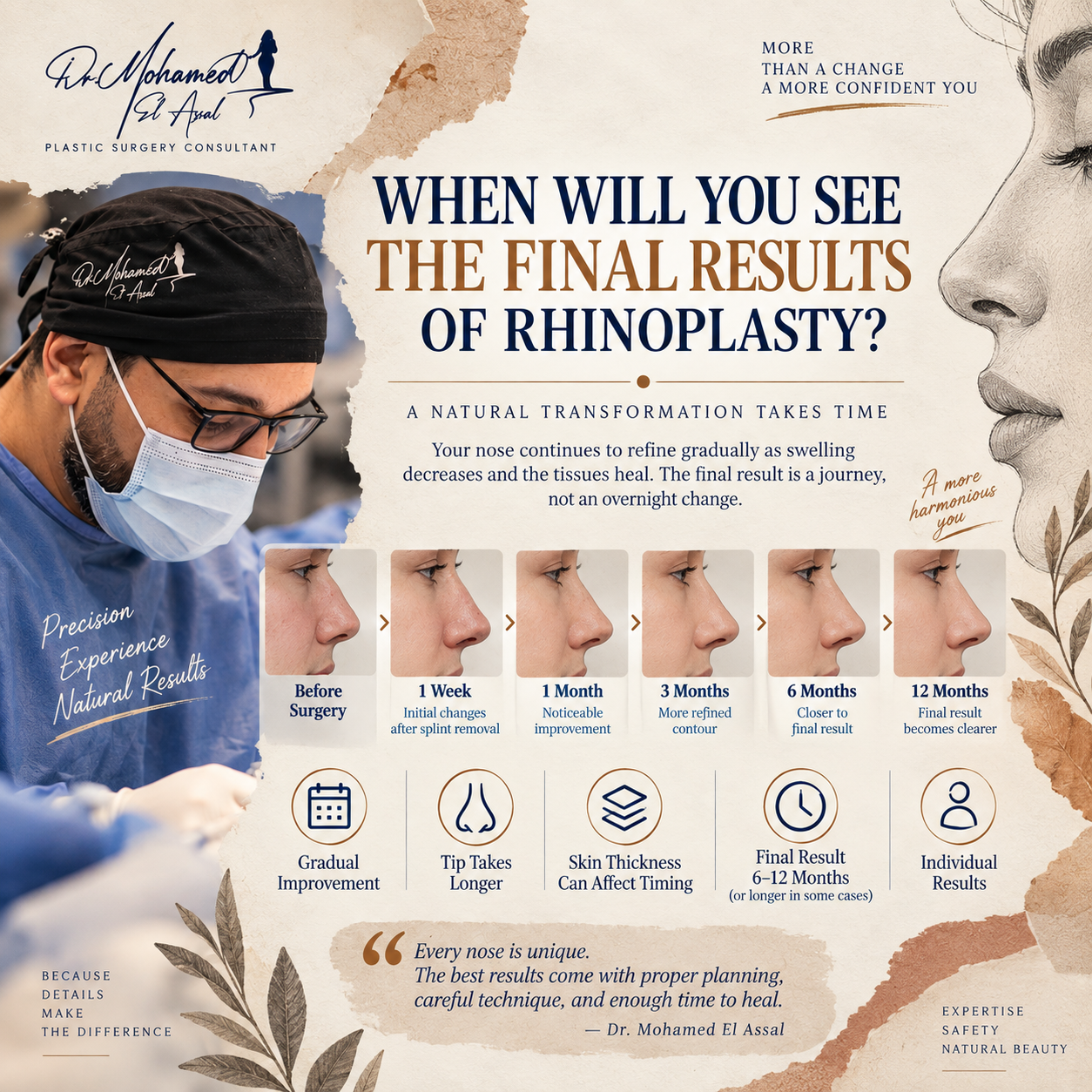
Rhinoplasty recovery is gradual rather than a single event. The following timeline is a general guide, not a fixed schedule for every patient.
The First Week
Swelling is usually obvious, and bruising around the eyes may also be present. After the splint is removed, the nose can still look larger or wider than expected.
2–4 Weeks
The more noticeable swelling usually begins to decrease, and the nose starts to look more natural. Fine details are still evolving.
1–3 Months
The overall contour becomes clearer. The nasal tip may still look fuller, rounder, or less defined than the expected final result.
3–6 Months
The tissues continue to settle and refinement becomes more visible, although residual swelling may remain.
6–12 Months and Beyond
The nose progressively approaches its final appearance. Patients with thicker skin or revision surgery may require longer for subtle changes to settle.
The First Week
Swelling is usually obvious, and bruising around the eyes may also be present. After the splint is removed, the nose can still look larger or wider than expected.
2–4 Weeks
The more noticeable swelling usually begins to decrease, and the nose starts to look more natural. Fine details are still evolving.
1–3 Months
The overall contour becomes clearer. The nasal tip may still look fuller, rounder, or less defined than the expected final result.
3–6 Months
The tissues continue to settle and refinement becomes more visible, although residual swelling may remain.
6–12 Months and Beyond
The nose progressively approaches its final appearance. Patients with thicker skin or revision surgery may require longer for subtle changes to settle.
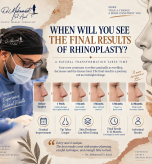
When Will I See My Final Rhinoplasty Result?
Early improvement and a final result are not the same thing. The nose may look significantly better within weeks, while subtle changes continue for months. Final assessment is therefore based on adequate tissue healing and resolution of residual swelling rather than the date the splint is removed.
Why Does the Nasal Tip Stay Swollen Longer?
The nasal tip is a complex region composed of skin, soft tissue, and cartilage. Its definition can take longer to emerge than changes along the nasal bridge. A tip that looks temporarily round or bulky does not necessarily represent the final contour.
Why Do Some Patients Stay Swollen Longer?
Recovery varies because of skin thickness, the extent of surgical changes, primary versus revision surgery, and individual healing characteristics.
Skin Thickness
Thicker skin can make subtle tip definition take longer to become visible.
Primary vs. Revision Rhinoplasty
Revision surgery may involve altered anatomy and scar tissue from previous procedures, so its healing pattern can differ from a primary rhinoplasty.
Can Swelling Make the Nose Look Asymmetric?
Yes. Swelling can resolve at different rates on the two sides of the nose, creating temporary asymmetry during early healing. This alone is not enough to judge the final result. New, rapidly increasing, or otherwise concerning asymmetry should be assessed by the surgeon.
How Can You Reduce Swelling After Rhinoplasty?
The safest approach is to follow the postoperative instructions provided for your specific procedure. These may include guidance on sleeping position, activity, medications, local care, and protecting the nose from pressure or trauma. Do not start medications, massage, or other swelling treatments unless your surgeon has recommended them.
When Should You Contact Your Surgeon?
Contact your surgical team if swelling suddenly increases or behaves unexpectedly, pain is worsening rather than improving, there is heavy bleeding, fever, unusual discharge, new breathing difficulty, or another symptom that concerns you. Educational information cannot replace an individual medical assessment.
Dr. Mohamed El Assal – Expertise
Dr. Mohamed El Assal's surgical philosophy reflects a firm commitment to natural, harmonious outcomes. Every intervention is designed according to the individual patient's anatomy and realistic goals, with paramount importance placed on preserving function and natural facial expression. His international training in Preservation Rhinoplasty and Deep Plane Facelift techniques supports the achievement of stable, natural long-term results — free from generic templates and one-size-fits-all solutions.
Frequently Asked Questions
Is swelling normal after rhinoplasty?
Yes. Swelling is expected after rhinoplasty and gradually decreases. Its severity and duration vary between patients.
When is swelling usually most noticeable?
Swelling is generally most obvious during the early days after surgery and then progressively improves.
Why does my nose look bigger after rhinoplasty?
Postoperative swelling can temporarily make the nose appear wider or larger. Early size is therefore not a reliable indicator of the final result.
Can one side of my nose be more swollen than the other?
Yes. Uneven swelling can occur during early healing. A growing difference, sudden change, or associated pain should be discussed with your surgeon.
When will my nasal tip become defined?
Tip definition develops gradually as swelling resolves. The nasal tip is often one of the last areas to settle, and timing varies with skin characteristics and the surgical procedure.
Rhinoplasty Recovery With Dr. Mohamed El Assal
There is no single recovery timeline that applies to every rhinoplasty patient. Skin characteristics, surgical details, and postoperative follow-up all matter when interpreting swelling and deciding when a result can be meaningfully assessed.