Can Gynecomastia Come Back After Surgery?
gynecomastia recurrence after surgery
can gynecomastia come back after surgery; gynecomastia recurrence; gynecomastia after gland removal; residual gland after gynecomastia surgery; weight gain after gynecomastia surgery; steroids and gynecomastia recurrence; recurrent gynecomastia
Can Gynecomastia Come Back After Surgery?
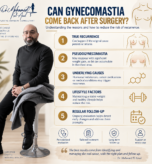
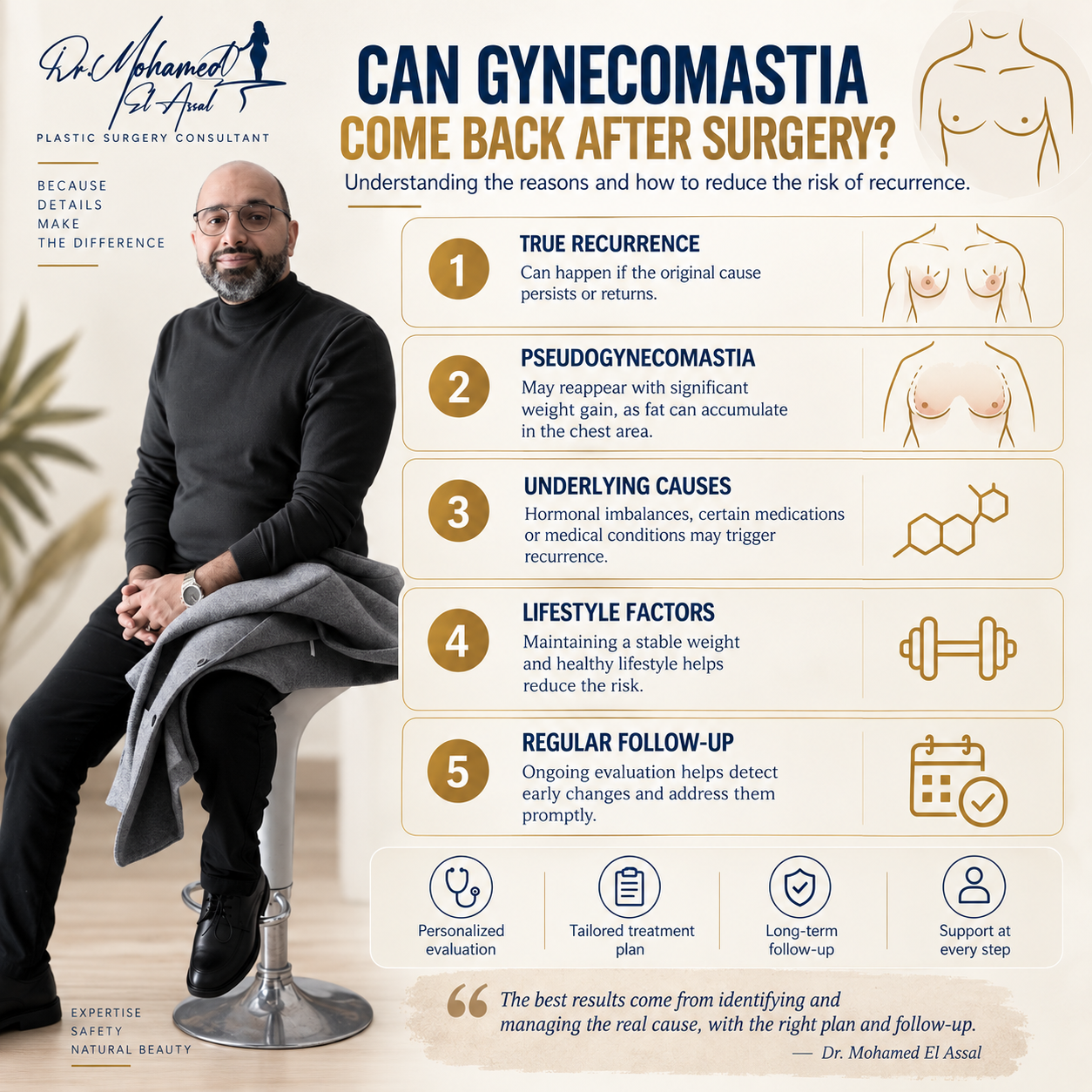
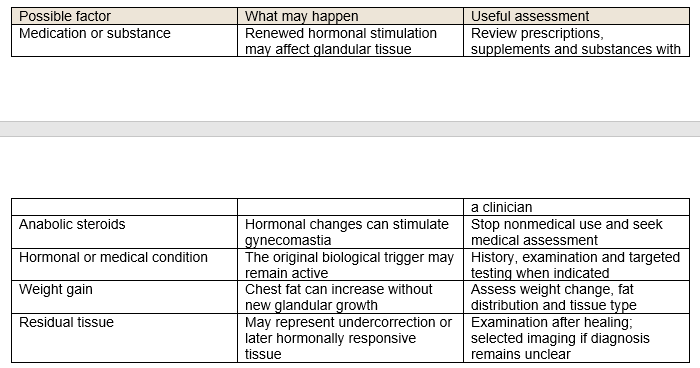
Chest enlargement can reappear after gynecomastia surgery, but “recurrence” does not always mean the same thing. New glandular growth may occur under renewed hormonal or medication-related stimulation, fat can increase with weight gain, residual gland or fat can remain from the first operation, and early postoperative swelling or scar tissue can temporarily mimic recurrence.
No operation can promise that gynecomastia will never return. Risk reduction begins before surgery by identifying the likely cause and tissue composition, addressing modifiable triggers when possible and choosing surgery that matches the anatomy. Afterward, stable weight, avoiding known triggers and appropriate medical follow-up help preserve the result without guaranteeing permanence.
No operation can promise that gynecomastia will never return. Risk reduction begins before surgery by identifying the likely cause and tissue composition, addressing modifiable triggers when possible and choosing surgery that matches the anatomy. Afterward, stable weight, avoiding known triggers and appropriate medical follow-up help preserve the result without guaranteeing permanence.
Can gynecomastia actually come back after surgery?
Yes, new or recurrent chest enlargement can occur after surgery, but it is not inevitable and there is no single recurrence probability that applies to every patient. ASPS says results are permanent in many cases while medications, steroids and weight gain can affect durability. Published studies document recurrence after different techniques and follow-up periods.
Is every postoperative chest fullness a recurrence?
No. During early recovery, swelling, fluid or firm scar tissue can make the chest look fuller without representing new glandular growth. Persistent residual gland or fat from the original operation can also represent undercorrection rather than true recurrence. Examination and the timeline of change help distinguish healing, residual tissue and new enlargement.
What can cause gynecomastia to return after surgery?
Chest enlargement can recur when a hormonal trigger persists or develops, a medication or anabolic steroid associated with gynecomastia is used, body fat increases substantially, or susceptible tissue remains after the first operation. Medical conditions can also cause gynecomastia. For this reason, recurrent enlargement should not automatically be considered a surgical problem alone.
Does weight gain after surgery mean the gland has grown back?
Not necessarily. Weight gain can increase chest fat and recreate a fuller appearance without new glandular proliferation, which is closer to pseudogynecomastia. ASPS recommends maintaining stable weight when weight contributed to the original condition. Examination can distinguish new fat from glandular tissue or a mixed pattern before additional treatment is considered.
Can weight loss correct fullness that returns?
If the new fullness is mainly fat, reducing body fat may improve it. If palpable glandular tissue, loose skin or incomplete correction is responsible, weight change alone may not solve the problem. Assessment after weight stabilizes is more useful than assuming every postoperative increase in chest size represents recurrent glandular gynecomastia.
Can medications or hormone changes cause gynecomastia to return?
Yes. Surgery removes existing tissue but cannot prevent future exposure to medications, health conditions or hormonal changes that can promote gynecomastia. Mayo Clinic and Cleveland Clinic list multiple drug and medical causes. If a trigger continues after surgery, remaining susceptible tissue or new glandular growth may contribute to recurrent enlargement and deserves medical evaluation.
Should I stop a medication if I think it is causing recurrence?
Do not stop a prescription medication on your own. ASPS and Cleveland Clinic advise discussing a possible medication trigger with the prescribing clinician, who can decide whether substitution or discontinuation is medically appropriate. The medication may be essential, and an evaluation is also needed to determine whether it is truly the most likely cause.
Can anabolic steroids cause gynecomastia to return after surgery?
Anabolic-androgenic steroids are a recognized gynecomastia trigger because they can alter hormonal balance. ASPS notes that continued steroid exposure can affect the durability of surgical results, and surgical studies report greater revision needs in some users. Avoiding nonmedical anabolic steroid use removes an important modifiable risk factor, although it cannot guarantee nonrecurrence.
Do all sports supplements cause gynecomastia?
No. It is inaccurate to treat every sports supplement as a gynecomastia trigger. Greater concern applies to products containing hormones, anabolic agents, undisclosed ingredients or compounds that affect endocrine pathways. Tell your clinician about all supplements and performance products you use rather than relying on marketing claims to judge hormonal safety.
Does residual gland tissue mean gynecomastia will come back?
Not necessarily. Depending on technique and chest anatomy, some tissue may be preserved to reduce the risk of contour depression around the areola, but residual fibroglandular tissue can contribute to undercorrection or later enlargement in selected cases. Current studies do not establish one universal gland-removal strategy that prevents recurrence in every patient.
What is the difference between residual tissue and true recurrence?
Residual tissue is gland or fat that remained after the first operation and may cause persistent projection. True recurrence implies new enlargement after the chest had previously improved and stabilized. In practice, distinguishing them may require a clear postoperative timeline, examination and occasionally imaging when the tissue cannot be confidently characterized clinically.
Does complete gland removal prevent gynecomastia recurrence?
It should not be presented as a guarantee. Some surgical series report very low revision or recurrence after extensive gland removal, while other techniques intentionally preserve tissue to avoid an areolar depression or contour defect. Comparative evidence remains limited, so surgeons balance tissue removal with chest contour and safety rather than applying one rule to everyone.
Why is there no single agreed amount of gland to remove?
Gynecomastia operations vary because gland thickness, fat distribution, skin excess, pectoral contour and areolar anatomy differ between patients. A systematic review found the overall treatment evidence to be low quality, and later studies evaluate different techniques without definitive consensus. Results from one surgical method therefore should not be generalized to every case.
How can you reduce the chance of gynecomastia returning?
Risk reduction focuses on modifiable causes: identify the likely trigger before surgery, review medications and supplements, avoid nonmedical anabolic steroids, treat an underlying hormonal or medical disorder when present and maintain stable weight. Endotext recommends resolving or treating an identifiable underlying cause before surgery when possible to reduce the chance of postoperative recurrence.
Does everyone need hormone testing before surgery?
Not necessarily in the same way. Testing depends on age, onset, symptoms, medication or steroid exposure, examination and signs suggesting an endocrine or systemic disorder. The purpose is to avoid operating while an active treatable cause remains unaddressed, not to order an identical laboratory panel for every patient regardless of clinical context.
When can you tell recurrence from normal postoperative swelling?
It is usually unhelpful to judge too early because swelling, firmness and scar tissue can change chest contour during recovery. ASPS notes that final gynecomastia surgery results may take several months to settle. New enlargement after clear stabilization, or fullness that progressively increases instead of improving, deserves examination to identify fat, gland or scar tissue.
What if I feel a firm lump under the areola after surgery?
A firm area can represent scar tissue, residual gland or another finding and cannot be reliably identified by self-examination alone. Contact your surgeon if it is new, enlarging, unusually painful or associated with nipple or skin changes. Examination may be sufficient, while imaging can be requested when the cause remains uncertain.
What happens if gynecomastia recurrence is confirmed?
Management starts by identifying the reason for renewed enlargement rather than proceeding directly to another operation. A medication, endocrine condition or weight-related fatty component should be addressed when possible. If stable residual or recurrent gland, fat, skin excess or contour deformity remains, revision surgery can be discussed after the anatomy and previous scars are assessed.
Does revision surgery simply repeat the first operation?
Not necessarily. Revision may need to address residual gland, fat, scar tissue, asymmetry, skin excess or contour depression, so the plan can differ substantially from the original procedure. A study of gynecomastia reoperations found multiple causes of undercorrection and overcorrection, supporting diagnosis of the specific problem before choosing excision, liposuction or reconstruction.
Is there a reliable recurrence rate after gynecomastia surgery?
There is no single reliable percentage that applies across patients and techniques. One long-term study found different recurrence patterns in lipomatous and glandular cases, but only a small number of invited patients returned for examination. Definitions, operations and follow-up duration vary across studies, making individual risk factors more useful than one general recurrence figure.
Why do published recurrence numbers vary so much?
Studies differ in whether renewed chest fat counts as recurrence, whether they measure glandular regrowth, which surgical techniques are used, how much tissue is preserved and how long patients are followed. Many reports are retrospective or single-center series. A percentage from one study therefore cannot be treated as an accurate personal prediction.
Dr. Mohamed El Assal – Expertise
Dr. Mohamed El Assal’s surgical philosophy reflects a firm commitment to long-lasting results, patient safety, and natural-looking chest contours. Understanding whether gynecomastia can return after surgery is an important part of setting realistic expectations and maintaining the results over time. Although gynecomastia surgery removes excess breast glandular tissue and fat to create a flatter, more masculine chest, recurrence is possible in certain circumstances. Particular importance is placed on identifying the underlying cause of gynecomastia, using an appropriate surgical technique, and guiding patients through proper postoperative care. His approach emphasizes maintaining a stable weight, addressing hormonal imbalances when necessary, and avoiding medications or substances that may contribute to breast tissue enlargement. The goal is to achieve lasting, natural-looking results while helping patients understand the factors that may influence recurrence and the importance of long-term follow-up.
Frequently asked questions about gynecomastia recurrence
Can gynecomastia come back after gland removal?
Chest enlargement can reappear after gland excision, but the cause may be weight-related fat, hormonal or medication-related stimulation of remaining tissue, or new glandular enlargement. Lifetime nonrecurrence cannot be guaranteed. Evaluating the original cause, maintaining stable weight and avoiding known triggers can reduce modifiable risks without eliminating every possibility.
Can weight gain bring gynecomastia back after surgery?
Weight gain can increase chest fat and recreate a fuller appearance even when glandular tissue has not regrown. ASPS advises stable weight when weight contributed to the condition. If the chest changes after weight gain, examination can determine whether the enlargement is mainly fat, glandular tissue or a mixture before treatment is considered.
Can anabolic steroids cause gynecomastia to recur?
Anabolic steroids can promote gynecomastia through hormonal effects and may affect the durability of surgical correction. This does not mean every fitness supplement causes gynecomastia, but nonmedical anabolic steroid use is a recognized avoidable trigger. Tell your clinician about hormones, performance-enhancing drugs and supplements when recurrence is being assessed.
Can residual gland tissue grow again after surgery?
Residual tissue can remain depending on the surgical technique and may later respond to hormonal or medication-related stimulation, but growth is not inevitable. Persistent projection may also represent undercorrection rather than true recurrence. Distinguishing these possibilities depends on postoperative timing, examination and, when clinically necessary, imaging of the tissue.
When should I see my surgeon if I think gynecomastia returned?
Arrange review if chest fullness increases after the result had stabilized, or if you develop a new lump, increasing asymmetry or nipple or skin changes. Early after surgery, swelling and scar tissue can mimic recurrence. The timing and examination help determine whether the change is normal healing, residual tissue, fat or new glandular enlargement.
Can revision surgery treat recurrent gynecomastia?
Revision surgery can be considered when assessment confirms residual or recurrent gland, fat, skin excess or another contour problem that is suitable for correction. It should not automatically repeat the original operation. Active hormonal, medication-related or weight-related causes should be addressed first, then the surgeon can plan treatment around the remaining tissue and scars.
How does Dr. Mohamed El Assal assess recurrence risk before and after gynecomastia surgery?
Assessment begins by identifying tissue type and the likely cause of gynecomastia while reviewing weight changes, medications, supplements, anabolic steroids and signs that may suggest a hormonal or medical trigger. After surgery, healing is followed until the chest stabilizes. If fullness later develops, gland, fat and scar tissue are distinguished before treatment is proposed.
For more information about treatment, read: Male Breast Reduction (Gynecomastia). [Internal Link → Male Breast Reduction (Gynecomastia)]
CTA: If chest fullness returns after surgery, do not assume that the gland has simply grown back or start treatment on your own. Examination can distinguish swelling, scar tissue, fat and glandular tissue, after which medication, hormonal and weight-related factors can be reviewed before deciding whether any additional treatment is appropriate.
For more information about treatment, read: Male Breast Reduction (Gynecomastia). [Internal Link → Male Breast Reduction (Gynecomastia)]
CTA: If chest fullness returns after surgery, do not assume that the gland has simply grown back or start treatment on your own. Examination can distinguish swelling, scar tissue, fat and glandular tissue, after which medication, hormonal and weight-related factors can be reviewed before deciding whether any additional treatment is appropriate.
Internal Links
• Male Breast Reduction (Gynecomastia) — https://drmohamedelassal.com/faq/male-breast-reduction-gynecomastia/
References
Mayo Clinic. Enlarged breasts in men (gynecomastia): Symptoms and causes. https://www.mayoclinic.org/diseases-conditions/gynecomastia/symptoms-causes/syc-20351793
Mayo Clinic. Enlarged breasts in men (gynecomastia): Diagnosis and treatment. https://www.mayoclinic.org/diseases-conditions/gynecomastia/diagnosis-treatment/drc-20351799
Cleveland Clinic. Gynecomastia: What It Is, Causes, Diagnosis & Treatment. https://my.clevelandclinic.org/health/symptoms/16227-enlarged-male-breast-tissue-gynecomastia
American Society of Plastic Surgeons (ASPS). Gynecomastia Surgery Recovery. https://www.plasticsurgery.org/cosmetic-procedures/gynecomastia-surgery/recovery
American Society of Plastic Surgeons (ASPS). Gynecomastia Surgery Results. https://www.plasticsurgery.org/cosmetic-procedures/gynecomastia-surgery/results
Endotext. Gynecomastia: Etiology, Diagnosis, and Treatment. https://www.ncbi.nlm.nih.gov/books/NBK279105/
Fricke A, Lehner GM, Stark GB, Penna V. Long-Term Follow-up of Recurrence and Patient Satisfaction After Surgical Treatment of Gynecomastia. Aesthetic Plast Surg. 2017. https://pubmed.ncbi.nlm.nih.gov/28280898/
Reoperation Because of Dissatisfaction with the Aesthetic Results of Gynecomastia Surgery: Technical Considerations. Aesthetic Plast Surg. 2021. https://pubmed.ncbi.nlm.nih.gov/33527188/
Gynecomastia: A systematic review. J Plast Surg Hand Surg. 2015. https://pubmed.ncbi.nlm.nih.gov/26051284/
Anabolic-androgenic Steroid Use Among Gynecomastia Patients: Prevalence and Relevance to Surgical Management. Plast Reconstr Surg. 2019. https://pubmed.ncbi.nlm.nih.gov/31021838/
Jabori SK, et al. Unraveling the Enigma: A Rare Case of Recurrent Idiopathic Gynecomastia in an Adolescent. J Craniofac Surg. 2024. https://pubmed.ncbi.nlm.nih.gov/37991407/
Dr. Mohamed El Assal. Male Breast Reduction (Gynecomastia). https://drmohamedelassal.com/faq/male-breast-reduction-gynecomastia/
Medically reviewed by Dr. Mohamed El Assal, Consultant Plastic Surgeon
Mayo Clinic. Enlarged breasts in men (gynecomastia): Diagnosis and treatment. https://www.mayoclinic.org/diseases-conditions/gynecomastia/diagnosis-treatment/drc-20351799
Cleveland Clinic. Gynecomastia: What It Is, Causes, Diagnosis & Treatment. https://my.clevelandclinic.org/health/symptoms/16227-enlarged-male-breast-tissue-gynecomastia
American Society of Plastic Surgeons (ASPS). Gynecomastia Surgery Recovery. https://www.plasticsurgery.org/cosmetic-procedures/gynecomastia-surgery/recovery
American Society of Plastic Surgeons (ASPS). Gynecomastia Surgery Results. https://www.plasticsurgery.org/cosmetic-procedures/gynecomastia-surgery/results
Endotext. Gynecomastia: Etiology, Diagnosis, and Treatment. https://www.ncbi.nlm.nih.gov/books/NBK279105/
Fricke A, Lehner GM, Stark GB, Penna V. Long-Term Follow-up of Recurrence and Patient Satisfaction After Surgical Treatment of Gynecomastia. Aesthetic Plast Surg. 2017. https://pubmed.ncbi.nlm.nih.gov/28280898/
Reoperation Because of Dissatisfaction with the Aesthetic Results of Gynecomastia Surgery: Technical Considerations. Aesthetic Plast Surg. 2021. https://pubmed.ncbi.nlm.nih.gov/33527188/
Gynecomastia: A systematic review. J Plast Surg Hand Surg. 2015. https://pubmed.ncbi.nlm.nih.gov/26051284/
Anabolic-androgenic Steroid Use Among Gynecomastia Patients: Prevalence and Relevance to Surgical Management. Plast Reconstr Surg. 2019. https://pubmed.ncbi.nlm.nih.gov/31021838/
Jabori SK, et al. Unraveling the Enigma: A Rare Case of Recurrent Idiopathic Gynecomastia in an Adolescent. J Craniofac Surg. 2024. https://pubmed.ncbi.nlm.nih.gov/37991407/
Dr. Mohamed El Assal. Male Breast Reduction (Gynecomastia). https://drmohamedelassal.com/faq/male-breast-reduction-gynecomastia/
Medically reviewed by Dr. Mohamed El Assal, Consultant Plastic Surgeon