Returning to the Gym After Gynecomastia Surgery: When and How?
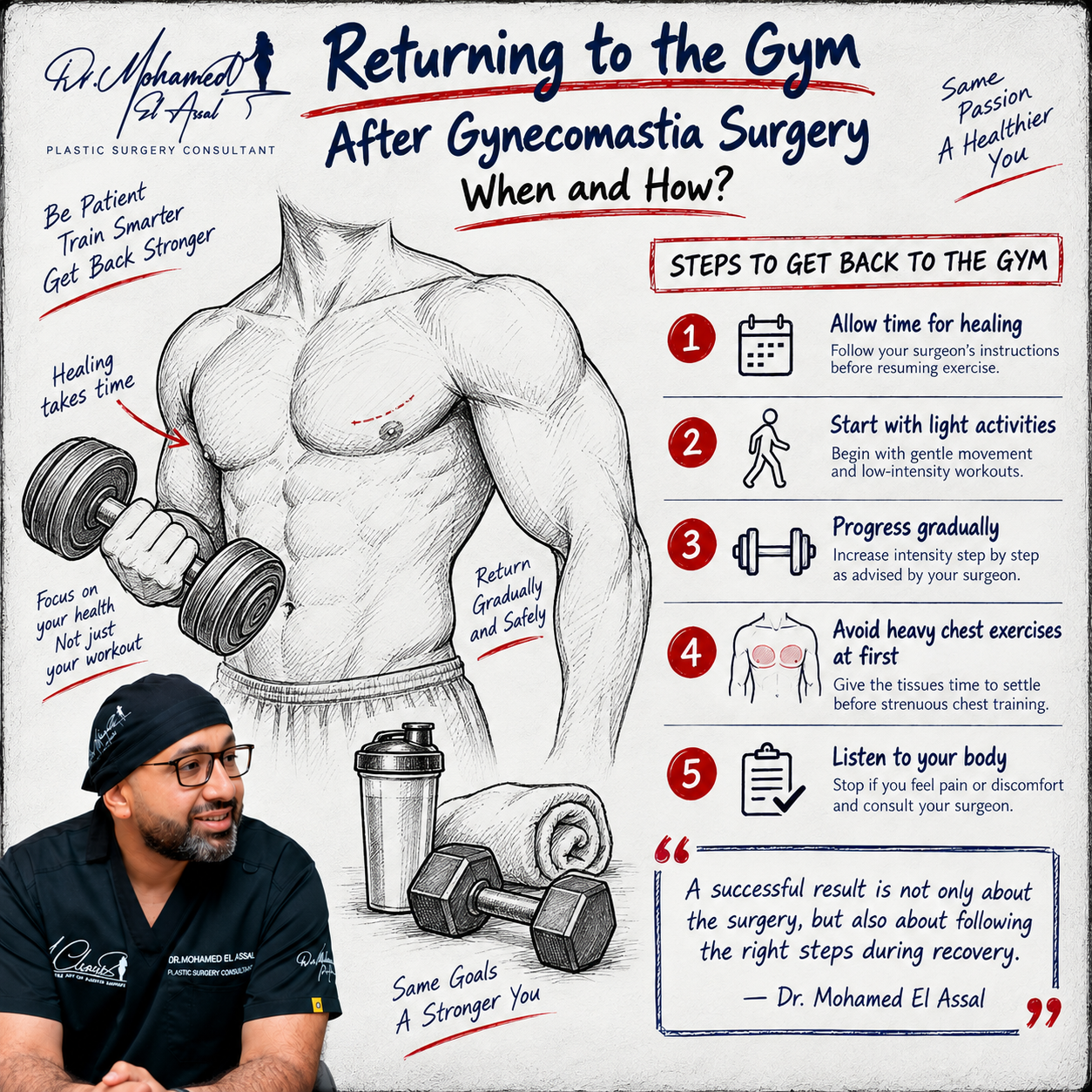
gym after gynecomastia surgery
when to workout after gynecomastia surgery; chest workout after gynecomastia surgery; lifting weights after gynecomastia surgery; exercise after male breast reduction; cardio after gynecomastia surgery; gynecomastia surgery recovery exercise
Returning to the Gym After Gynecomastia Surgery: When and How?
Returning to the gym after gynecomastia surgery does not follow one fixed date for everyone. The extent of liposuction or gland excision, incision healing, swelling and any additional skin procedure all affect progression. The goal is to restore activity gradually without exposing healing incisions and chest tissues to excessive force, friction or early strain.
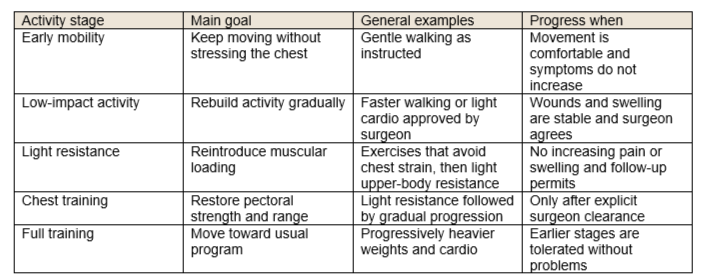
Specialty guidance supports walking and light movement during recovery while strenuous exercise, heavy lifting and direct upper-body loading are restricted until the surgeon allows progression. Return generally moves from low-impact activity to resistance work and then chest-specific loading. Your follow-up examination matters more than how energetic you feel or another patient’s timeline.
Specialty guidance supports walking and light movement during recovery while strenuous exercise, heavy lifting and direct upper-body loading are restricted until the surgeon allows progression. Return generally moves from low-impact activity to resistance work and then chest-specific loading. Your follow-up examination matters more than how energetic you feel or another patient’s timeline.
When can you go back to the gym after gynecomastia surgery?
There is no universal date for returning to the gym after gynecomastia surgery. The Aesthetic Society states that recovery varies with severity and surgical extent, with low-impact activity returning before progressive upper-body resistance in many patients. Your surgeon should determine each stage after checking wound healing, swelling, discomfort and the procedure performed.
Why should exercise return gradually after male breast reduction?
Gradual progression limits excessive force, friction and motion across healing incisions and deeper chest tissues. ASPS specifically advises protecting surgical incisions from excessive force, swelling, abrasion and movement during healing. Start at an intensity that does not provoke increasing pain or swelling, then progress only as recovery remains stable and your surgeon approves.
Is walking allowed after gynecomastia surgery?
Gentle walking is different from gym training and is commonly part of early postoperative mobility when your surgeon permits it. The Aesthetic Society encourages getting up and walking during recovery while avoiding exercise and heavy activity. The aim is comfortable movement without turning the walk into cardiovascular training that strains the healing chest.
When can you restart cardio after gynecomastia surgery?
Cardio should return in stages rather than all at once. Low-impact activity may begin after your surgeon allows increased movement, with duration and intensity rising only if symptoms remain stable. Running and high-intensity training may require more healing than walking because greater exertion and chest movement can stress recovering tissues and increase swelling.
When can you lift weights after gynecomastia surgery?
Weight training usually requires more caution than walking because resistance increases load through the chest, shoulders and arms. The Aesthetic Society describes gentle progressive upper-extremity resistance later in recovery, but the timing varies with surgical extent. Your surgeon should clear resistance work and guide progression rather than using a fixed calendar date.
Should you restart with your pre-surgery weights?
No. Even after resistance training is cleared, return should be progressive rather than starting immediately at previous loads. Your muscles may feel capable before surgical tissues and scars are ready for high tension. Begin with lighter resistance and controlled technique, then increase only if the chest remains stable and your surgeon allows further loading.
When can you train your chest after gynecomastia surgery?
Chest exercises such as bench press, push-ups and fly movements directly load the pectoral region and should not resume simply because pain has faded. After surgeon clearance, begin with lighter resistance and a comfortable range of motion, then build gradually. Wider excision or skin removal can require a slower progression than limited surgery.
Which exercises need extra caution at first?
Movements that create direct pectoral resistance or a wide shoulder range, including bench press, push-ups and fly variations, generally need more deliberate progression than walking or light lower-body activity. There is no universal prohibited-exercise list; the operation performed, incision healing and your surgeon’s examination determine which movements are appropriate at each stage.
Does gym timing differ after liposuction versus gland excision?
Yes. Recovery can differ because the amount of treated tissue, incision length, gland excision and any skin removal affect healing. The Aesthetic Society links recovery time to surgical extent, while ASPS emphasizes individualized postoperative instructions. A timetable from limited liposuction should not automatically be applied to someone who had broader excision or skin surgery.
Does skin excision change the return-to-gym plan?
It can. Longer incisions and greater skin tension may require additional protection while healing. Drains, delayed wound healing or a specific area of concern can also change activity restrictions. When skin has been removed, individualized instructions about arm movement, lifting and chest training become especially important compared with a generic recovery schedule.
How should you increase exercise without overloading the chest?
Begin at the level your surgeon has cleared and increase one variable at a time, such as duration or resistance, rather than changing everything together. Monitor pain, swelling and pulling around the incisions during and after training. If symptoms increase and persist, step back to lighter activity and contact your surgeon before progressing further.
What signs suggest you returned to exercise too quickly?
Increasing pain or swelling after activity, bleeding, drainage, wound separation or worsening redness are reasons to stop training and contact your surgeon. Shortness of breath, chest pain or an unusual heartbeat requires urgent medical assessment. Do not use pain tolerance alone as proof that healing tissues are ready for heavier resistance or chest training.
Does the compression garment determine when you can return to the gym?
A compression garment can support the chest and help manage swelling during recovery, but wearing it does not mean tissues are ready for strenuous training. Duration varies according to the surgeon and operation. Exercise progression depends on wound healing, swelling, discomfort and surgical extent, so garment use should not be treated as the sole clearance test.
Should you exercise while wearing the compression garment?
There is no single rule for every patient. Your surgeon may allow the garment during selected light activities, depending on garment type, exercise and healing stage. It should not create painful friction or irritate incisions, and wearing compression should never be used to bypass restrictions on lifting, shoulder movement or chest loading during recovery.
Why do published timelines for returning to exercise differ?
Timelines differ because sources describe patients and operations of varying extent. The Aesthetic Society outlines low-impact activity followed by progressive upper-body resistance, Cleveland Clinic advises avoiding heavy lifting and overhead reaching during healing, and ASPS leaves exercise timing to surgeon-specific instructions. Published time ranges should therefore be treated as approximate frameworks, not universal deadlines.
Dr. Mohamed El Assal – Expertise
Dr. Mohamed El Assal's surgical philosophy reflects a firm commitment to safe recovery and optimal, natural-looking results. Returning to the gym after gynecomastia surgery requires a carefully planned approach tailored to each patient's healing progress, physical condition, and fitness goals. Particular importance is placed on allowing adequate time for recovery, minimizing complications, and protecting the chest's newly contoured appearance. His approach emphasizes a gradual return to physical activity, with light exercise introduced when appropriate and strenuous workouts, especially chest training and heavy lifting, resumed only when medically cleared. The goal is to support a smooth recovery and long-lasting surgical results — without rushing the healing process or following a one-size-fits-all recovery timeline.
Frequently asked questions about the gym after gynecomastia surgery
When can I go to the gym after gynecomastia surgery?
You may return to the gym environment before returning to full training if the purpose is surgeon-approved light activity. The Aesthetic Society places low-impact activity before progressive upper-body resistance. Do not copy another patient’s date; the procedure performed, swelling, wound healing and follow-up findings determine when each stage is appropriate for you.
When can I bench press after gynecomastia surgery?
Bench press directly loads the pectoral region, so it generally returns later than walking or light activity. Once your surgeon clears chest training, start with lighter resistance and a comfortable range before increasing gradually. Stop and seek guidance if pain, swelling or pulling around the incision increases during or after the exercise.
Can I train legs before I train chest?
Light lower-body exercise may be allowed before direct chest training if it does not require heavy loading or forceful upper-body stabilization. However, heavy squats or loaded movements can still increase overall exertion and demand chest and shoulder bracing. Do not assume every leg exercise is automatically safe early in recovery; follow your surgeon’s restrictions.
Can cardio increase swelling after gynecomastia surgery?
Strenuous activity can increase blood flow and movement around healing tissues and may be followed by more swelling or discomfort when resumed too early. Cardio should therefore progress gradually after clearance. If swelling clearly increases after training or remains elevated instead of settling, reduce activity and contact your surgeon before continuing progression.
If I have no pain, am I ready to lift weights?
No. Less pain is encouraging but does not prove that deeper tissues have completed healing. You may feel physically strong before incisions and internal tissues are ready for high resistance. Cleveland Clinic and ASPS emphasize following postoperative restrictions, so clearance should reflect the procedure, examination and healing stage rather than pain alone.
What should I do if pain or swelling appears after returning to the gym?
Stop the exercise that triggered symptoms and return to a lighter activity level. Contact your surgeon if pain or swelling is significant, increasing or persistent. Seek urgent medical assessment for shortness of breath, chest pain or an unusual heartbeat. Do not use pain medication simply to push through training without medical guidance.
How does Dr. Mohamed El Assal decide when you can return to the gym?
Progress is based on the operation performed, incision healing, swelling, whether gland or skin was excised and how the chest responds to movement at follow-up. Clearance is not based on the number of postoperative days alone. When healing permits, activity advances from light movement to resistance, with heavier chest loading introduced only when appropriate.
For more information about the procedure and recovery, read: Male Breast Reduction (Gynecomastia). [Internal Link → Male Breast Reduction (Gynecomastia)]
CTA: Before restarting heavy weights or direct chest training, ask your surgeon which activity stage is appropriate for your recovery. The goal is not prolonged inactivity when healing is uncomplicated, but a controlled increase in movement and resistance that protects incisions and tissues while helping you return safely to your usual training.
For more information about the procedure and recovery, read: Male Breast Reduction (Gynecomastia). [Internal Link → Male Breast Reduction (Gynecomastia)]
CTA: Before restarting heavy weights or direct chest training, ask your surgeon which activity stage is appropriate for your recovery. The goal is not prolonged inactivity when healing is uncomplicated, but a controlled increase in movement and resistance that protects incisions and tissues while helping you return safely to your usual training.
Internal Links
• Male Breast Reduction (Gynecomastia) — https://drmohamedelassal.com/faq/male-breast-reduction-gynecomastia/
References
American Society of Plastic Surgeons (ASPS). Gynecomastia Surgery Recovery. https://www.plasticsurgery.org/cosmetic-procedures/gynecomastia-surgery/recovery
American Society of Plastic Surgeons (ASPS). What is gynecomastia surgery, and is it right for you? https://www.plasticsurgery.org/news/articles/what-is-gynecomastia-surgery-and-is-it-right-for-you
The Aesthetic Society. Gynecomastia Surgery - Aftercare & Recovery. https://www.theaestheticsociety.org/procedures/breast/gynecomastia/aftercare-recovery
The Aesthetic Society. Plastic Surgery Recovery Expectations. https://www.theaestheticsociety.org/patient-resources/aftercare-recovery/expectations
The Aesthetic Society. Plastic Surgery Recovery Checklist. https://prod.theaestheticsociety.org/patient-resources/aftercare-recovery/checklist
Cleveland Clinic. Gynecomastia Surgery (Male Breast Reduction): What to Expect. https://my.clevelandclinic.org/health/treatments/24022-gynecomastia-surgery
Rosenberg GJ. Gynecomastia: suction lipectomy as a contemporary solution. Plast Reconstr Surg. 1987. https://pubmed.ncbi.nlm.nih.gov/3628568/
Dr. Mohamed El Assal. Male Breast Reduction (Gynecomastia). https://drmohamedelassal.com/faq/male-breast-reduction-gynecomastia/
Medically reviewed by Dr. Mohamed El Assal, Consultant Plastic Surgeon
American Society of Plastic Surgeons (ASPS). What is gynecomastia surgery, and is it right for you? https://www.plasticsurgery.org/news/articles/what-is-gynecomastia-surgery-and-is-it-right-for-you
The Aesthetic Society. Gynecomastia Surgery - Aftercare & Recovery. https://www.theaestheticsociety.org/procedures/breast/gynecomastia/aftercare-recovery
The Aesthetic Society. Plastic Surgery Recovery Expectations. https://www.theaestheticsociety.org/patient-resources/aftercare-recovery/expectations
The Aesthetic Society. Plastic Surgery Recovery Checklist. https://prod.theaestheticsociety.org/patient-resources/aftercare-recovery/checklist
Cleveland Clinic. Gynecomastia Surgery (Male Breast Reduction): What to Expect. https://my.clevelandclinic.org/health/treatments/24022-gynecomastia-surgery
Rosenberg GJ. Gynecomastia: suction lipectomy as a contemporary solution. Plast Reconstr Surg. 1987. https://pubmed.ncbi.nlm.nih.gov/3628568/
Dr. Mohamed El Assal. Male Breast Reduction (Gynecomastia). https://drmohamedelassal.com/faq/male-breast-reduction-gynecomastia/
Medically reviewed by Dr. Mohamed El Assal, Consultant Plastic Surgeon