
Wide Nasal Tip Refinement – Modern Surgical and Cosmetic Solutions
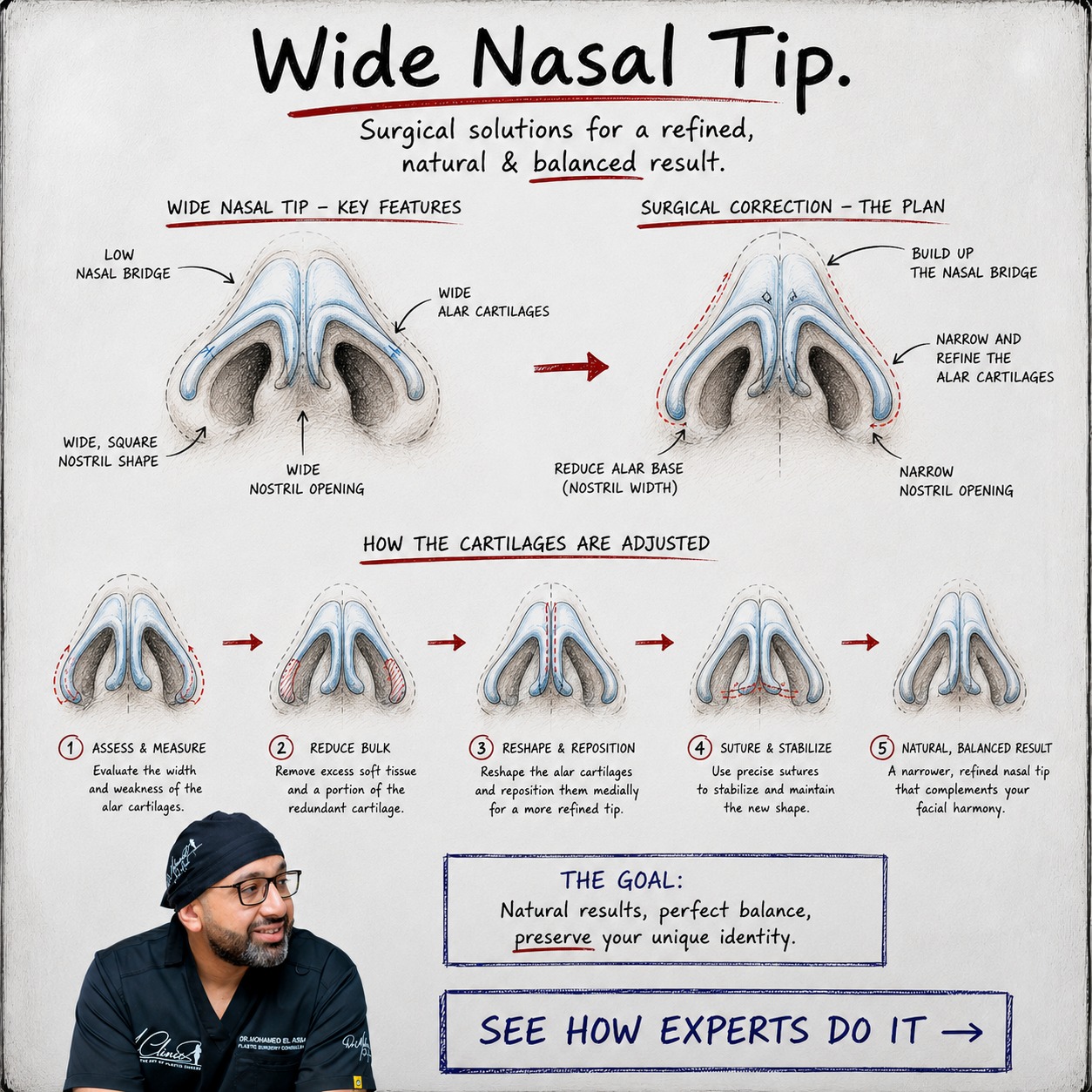
What Is a Wide Nasal Tip?
A wide or bulbous nasal tip (Bulbous Tip) gives the nose a round or heavy appearance. It does not arise from a single cause; it may result from one or several simultaneous anatomical factors, including: increased skin thickness with a dense fibrofatty layer, increased interdomal distance, weak or wide lower lateral cartilages, convex domes, or excess fibrofatty tissue — the underlying anatomy varies from patient to patient.
Who Is the Right Candidate for Surgery?
Not every case requires full rhinoplasty. In mild presentations, alar base reduction alone may suffice. Cases with true cartilage widening or very thick skin benefit most from open rhinoplasty. Assessment always begins with clinical examination to characterise the individual anatomy.
Surgical Techniques for Nasal Tip Refinement
Surgery is performed via an open approach that allows direct visualisation of the cartilage framework and precise manoeuvres including: domal sutures to narrow the dome, and cephalic trim — which aims not merely to reduce volume but to reshape the cartilage while preserving adequate support to prevent valve collapse or a pinched tip. Excision of excess fibrofatty tissue may also be performed.
Can a Wide Nasal Tip Be Corrected Without Surgery?
Hyaluronic acid fillers can improve visual nasal tip proportions in selected cases after physician evaluation, but their limitations must be understood: they do not actually reduce nasal size, do not correct true structural width, and are not suitable for all cases. The effect is temporary (9–18 months) and may be useful for patients wishing to preview an outcome before committing to surgery.
The Impact of Thick Skin on Results
Thick skin is the greatest challenge in this type of surgery. It does not reveal the final result immediately; full contraction may take up to 12 months, or longer in very thick-skinned patients. Success depends on building a strong cartilage framework capable of projecting through the skin to define the tip clearly.
What to Expect After Surgery
Recovery typically takes two to four weeks, with follow-up on the schedule determined by the surgeon. Post-operative care is essential: avoid direct sun exposure and follow the surgeon's instructions carefully.
Dr. Mohamed El Assal – Expertise
Dr. Mohamed El Assal has developed his nasal tip refinement expertise through specialised training with Prof. Yves Saban, one of the world's leading pioneers of Preservation Rhinoplasty. This experience is reflected in selecting the anatomically appropriate technique for each case, prioritising cartilage support and nasal airway function, and achieving a natural, harmonious tip — not merely a smaller one.
Frequently Asked Questions
Can only the nasal tip be refined without changing the rest of the nose?
Yes, in many cases a focused Tipplasty can address the tip without altering the dorsum.
Will a wide nasal tip return after surgery?
Results are generally stable with an experienced surgeon, although thick skin may partially obscure fine detail.
Does thick skin prevent a successful outcome?
No, but it requires a stronger cartilage framework and more time for the final result to become visible.
Can filler replace surgery in my case?
Filler improves visual proportions temporarily in selected cases but does not correct true structural width.
How long does the procedure take?
Typically between one and two hours depending on the technique required.
When will the final result be visible?
Initial improvement is seen at 4–6 weeks; the true final result appears at 12 months or longer in thick-skinned patients.

2 Comments
Ali
August 29, 2026, at 6:41 amصباح الخير
استفسر بخصوص عملية لأنف
حالتي تم عمل 4 عمليات مسبقه بين تحميل وتعديل حاجزه لسبب حادثين سياره
والعمليه الاخيره كانت جدا ممتازه علي يد دكتور الماني وتم تركيب غضاريف صناعيه اتوقع سوف ارسل لك التقرير للحاله
عندي الارنبه من الاسفل ماسله شوي لدرجة الشكل مختلف ارغب بتعديل البسيط والشكل رجولي
admin
September 24, 2026, at 11:27 amبرجاء التواصل علي رقم 01006838376 لتقييم الحالة