Natural Results in Plastic Surgery – Why Harmony Is the True Standard
What Does "Natural Result" Mean in Cosmetic Surgery?
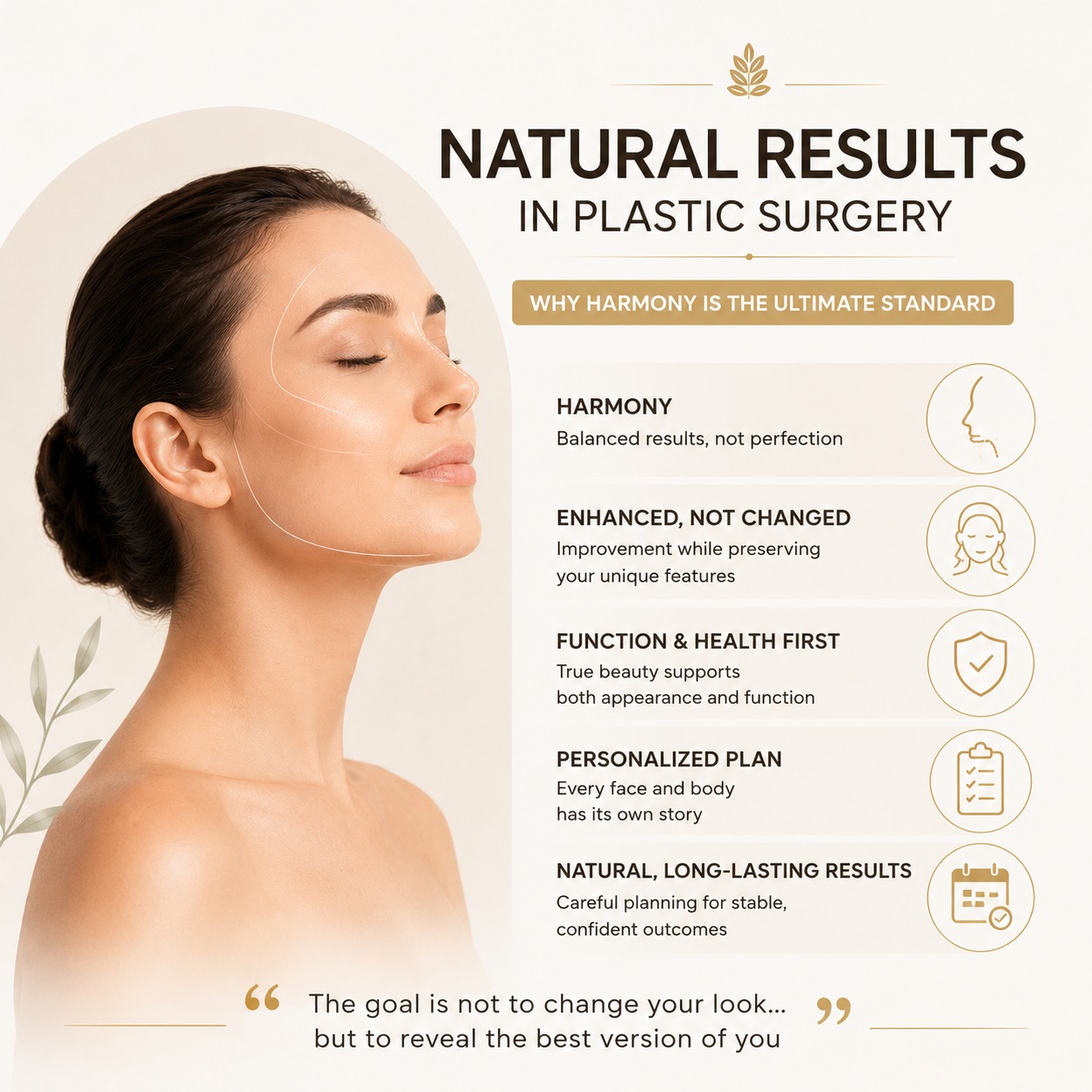
A natural result does not mean a subtle change, nor does it mean a single shape that suits everyone. It means achieving a result harmonious with the patient's individual facial features and physical structure — preserving natural expression and organ function, and fulfilling realistic goals without erasing personal identity. When people say "you look fresher and more vibrant" without knowing why, that is the pinnacle of aesthetic success.
Patient Wishes Versus Anatomical Limits
An ethical surgeon's role is to clarify what is safe and proportionate to the patient's anatomy. The final decision is made collaboratively through shared decision-making after thorough discussion of benefits, risks, and realistic expectations. Some requests may appear attractive in photographs but do not suit the individual's anatomical structure.
The Harms of Disproportionate Changes
Disproportionate changes are associated with well-documented outcomes: the "mask face" of over-aggressive facelift, the overfilled appearance from excessive filler, the frozen expression of excessive botulinum toxin, and the loss of authentic facial features and personal aesthetic identity.
The Staged Approach in Aesthetic Medicine
Experienced surgeons adopt a staged philosophy: start with the least invasive intervention and assess the result before adding more. In injections, begin with minimal volumes and reassess after two weeks. In surgery, select the plan that achieves the goal with the least possible intervention.
Preserving Function Is Part of Beauty
In nasal surgery, a successful outcome encompasses not only form but also the preservation or improvement of breathing function — at the core of the modern Preservation Rhinoplasty philosophy.
When Does a Cosmetic Request Become Concerning?
Specialists warn of Body Dysmorphic Disorder (BDD) warning signs when a person seeks continuous change despite objectively good outcomes. In such cases, the ethical standard requires the practitioner to decline further treatment and refer the patient for appropriate psychological support.
Why Do Results Differ Between Patients?
Anatomy, skin quality, healing patterns, and adherence to post-operative instructions all vary between individuals. An individualised surgical plan based on clinical examination is the primary guarantee of a proportionate result.
Dr. Mohamed El Assal – Expertise
Dr. Mohamed El Assal's surgical philosophy reflects a firm commitment to natural, harmonious outcomes. Every intervention is designed according to the individual patient's anatomy and realistic goals, with paramount importance placed on preserving function and natural facial expression. His international training in Preservation Rhinoplasty and Deep Plane Facelift techniques supports the achievement of stable, natural long-term results — free from generic templates and one-size-fits-all solutions.
Frequently Asked Questions
Does a natural result mean the change will be subtle?
No. A natural result can be a significant change — but one that harmonises with your facial features without erasing your identity.
Can a surgeon deliver any shape the patient requests?
An ethical surgeon clarifies what is anatomically compatible and what may produce a disproportionate outcome.
How do I know the result will suit my face?
Through careful pre-operative planning with the surgeon using imaging and morphological analysis tools.
Do modern techniques help achieve more natural results?
Yes, techniques such as Preservation Rhinoplasty and Deep Plane were specifically designed to produce more natural, lasting outcomes.
Why do some surgeons refuse certain patient requests?
Because some requests may produce a disproportionate outcome, compromise function, or conflict with the patient's individual anatomy.