Facelift and Neck Lift: When Are They Done Together?
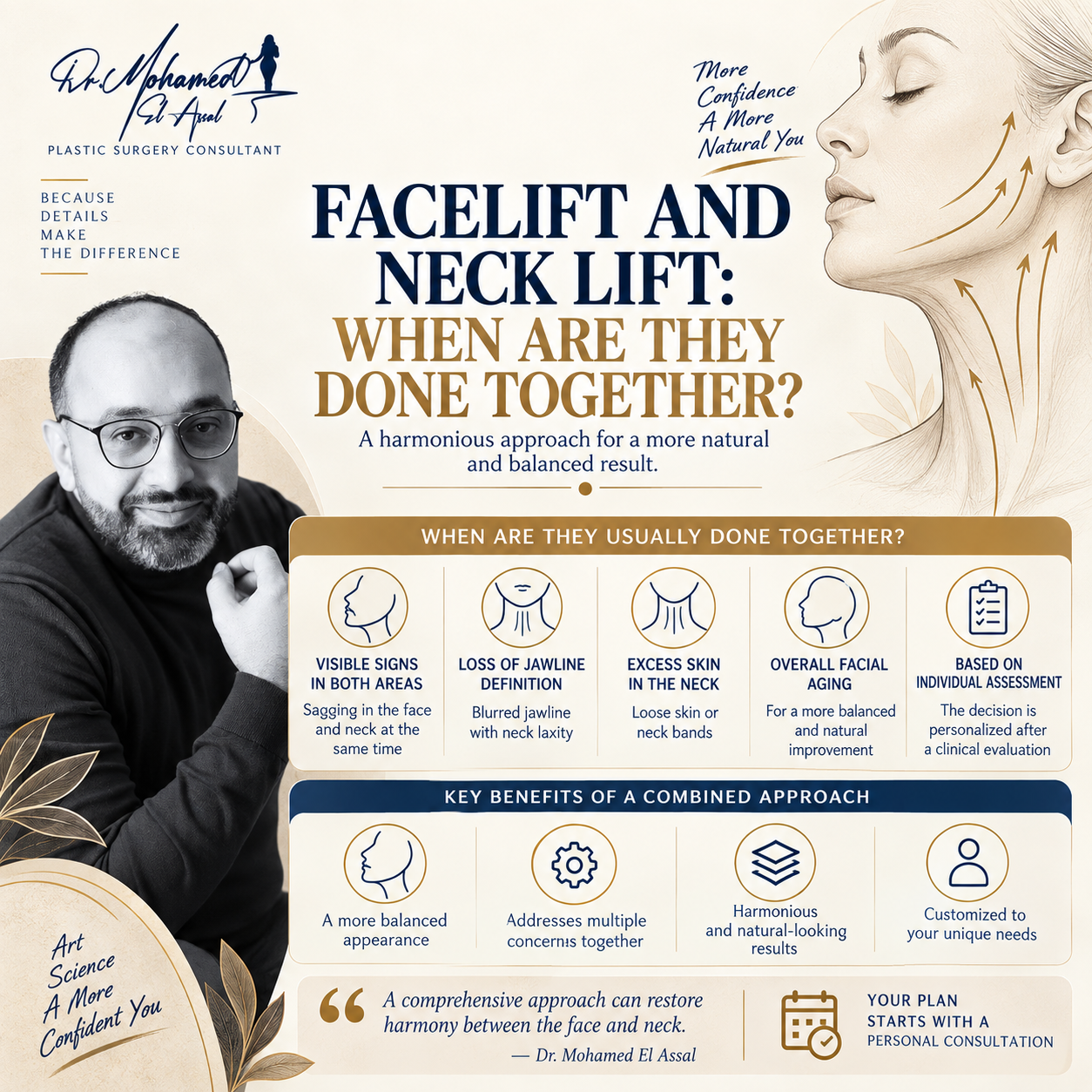
facelift and neck lift together
facelift vs neck lift; facelift with neck lift; neck lift with facelift; jawline lift; submental laxity; platysma bands; platysmaplasty; jowls and neck lift; combined face and neck lift
Facelift and Neck Lift: When Are They Done Together?
Facelift and neck lift surgery overlap anatomically, but they are not the same procedure. A facelift primarily addresses descent of the lower face, jowls and jawline, while a neck lift focuses on the tissues beneath the jaw and chin and on the neck itself. They may be combined when aging changes cross both regions, or performed separately when the concern is localized.
Planning should not be based on age or procedure names alone. What looks like one area of “sagging” may arise from skin laxity, tissue descent, submental fat, platysma separation or several factors together. Examination identifies which region and tissue layer actually requires treatment and whether treating only one area would leave a meaningful mismatch.
Planning should not be based on age or procedure names alone. What looks like one area of “sagging” may arise from skin laxity, tissue descent, submental fat, platysma separation or several factors together. Examination identifies which region and tissue layer actually requires treatment and whether treating only one area would leave a meaningful mismatch.
What is the difference between a facelift and a neck lift?
A facelift, or rhytidectomy, repositions descended facial tissues, particularly in the lower face, jowls and jawline depending on technique. A neck lift focuses below the jaw and chin and may address skin, fat and the superficial neck muscle called the platysma. Because the regions are continuous, some surgical steps and effects can overlap.
Where does the face end and the neck begin surgically?
There is no sharp anatomical boundary. Superficial tissue layers of the face continue into the neck, and the jowl-jawline region influences both. A facelift can therefore improve the jawline and upper neck, but anterior neck or submental problems may require direct treatment that is not automatically accomplished by facial tissue repositioning alone.
What areas does a facelift usually address?
Facelift surgery typically targets descent of the cheeks or lower face, jowls and loss of jawline definition, with deeper tissues and skin managed according to the surgical plan. The upper neck may improve as part of this correction, but facelift surgery does not automatically mean that every submental fat deposit, platysma band or area of neck skin laxity is treated.
Does a facelift always include the neck?
The scope of a procedure called a “facelift” varies by technique and operative plan. ASPS notes that a traditional facelift may sculpt or redistribute fat in the face, jowls and neck, and an additional incision beneath the chin may be used to improve an aging neck. The consultation should therefore define the planned anatomy rather than rely on the label alone.
What areas does a neck lift usually address?
A neck lift targets visible aging in the jawline and neck, including loose neck skin, selected fat deposits beneath the chin and visible muscle bands. Depending on anatomy, surgery may involve fat contouring, tissue repositioning, platysma treatment or removal of excess skin. Not every neck lift requires every step; the plan is tailored to the actual cause.
What is the platysma and why does it matter in neck lift surgery?
The platysma is a thin superficial muscle extending from the upper chest and neck toward the lower face. With aging and tissue change, its edges or bands may become more visible. Selected neck lift procedures modify or tighten the platysma, but the exact maneuver varies with band pattern, laxity, fat distribution and the surgeon’s operative plan.
When are facelift and neck lift surgery considered together?
Combined surgery may be discussed when laxity extends from the lower face and jowls into the neck, or when jawline loss coexists with neck skin laxity, visible platysma bands or a submental problem requiring direct treatment. The purpose is to plan connected anatomical regions together when both are involved, not to add a neck procedure routinely.
Which signs make neck assessment especially important during facelift planning?
Visible platysma bands, loose skin beneath the chin, submental fullness and loss of the chin-neck angle are reasons to assess the neck separately. None of these findings automatically requires a neck lift because similar appearances can have different anatomical causes. Examination determines whether the concern arises from skin, fat, muscle, facial descent or a combination.
When can a facelift be performed without a separate neck lift?
A facelift alone may be appropriate when the dominant problem is lower-face descent, jowling and jawline loss while neck skin quality remains relatively good and there is no important platysma or submental issue requiring direct treatment. The answer also depends on how much upper-neck improvement the selected facelift technique is expected to provide.
Do jowls automatically mean I need a neck lift?
No. Jowls can reflect lower-face tissue descent, skin laxity, fat distribution and skeletal contour, often in combination. Their presence does not define the operation by itself. The surgeon assesses whether repositioning facial tissues can restore the jawline adequately or whether a separate neck component is needed to address findings below the jaw.
When can a neck lift be performed without a facelift?
A neck lift can be considered on its own when the primary concern is beneath the chin or in the neck while the face remains relatively well positioned and does not require meaningful surgical lifting. ASPS specifically describes patients who are not ready for a full facelift but have loose neck skin, a double chin or jowl-line concerns.
Does a neck lift raise the midface?
A neck lift is not designed primarily to elevate the cheek or midface. Its focus is the jawline, submental area and neck. If meaningful facial descent is present in addition to neck aging, treating the neck alone can leave the facial component unchanged. That is why face and neck anatomy should be evaluated together before defining surgical scope.
How does a surgeon determine whether the problem is skin, fat or platysma?
Assessment combines visual examination and palpation of skin, fat, jawline, chin-neck angle and platysma bands with review of skeletal contour, medical history and previous surgery. The goal is to identify the tissue layer producing the appearance, because excess skin, fat, muscle laxity and facial descent are different problems and do not require identical surgical maneuvers.
Why are photographs alone not enough for surgical planning?
Photographs document appearance but cannot reliably show skin elasticity, fat depth, platysma movement or the behavior of deeper tissues. Submental fullness can also look similar despite different causes. Final planning therefore relies on physical examination and medical history alongside photography, rather than selecting a face or neck operation from a static image alone.
How are the jawline, submental area and platysma bands different surgical problems?
These areas are adjacent but may require different solutions. Jawline loss often relates to jowling and lower-face descent, submental fullness can arise from fat or deeper anatomy, and vertical neck bands commonly involve the platysma. Procedure planning works best when each visible feature is traced to its anatomical source rather than treating every aging neck with the same maneuver.

Does combining facelift and neck lift mean a larger operation for every patient?
Treating both regions can broaden surgical scope compared with addressing one area, but the actual extent varies greatly with anatomy and technique. There is no single standardized operation called a “face and neck lift.” Some patients need only limited neck work, while others require additional submental access, platysma treatment or more extensive skin redraping.
Does combined surgery always require additional incisions?
Not in the same way for every patient. Facelift and neck-lift incisions can share pathways around the ear and hairline, while some neck plans use a small incision beneath the chin to access fat or platysma. ASPS notes that a submental incision is often needed in selected neck-lift cases, so incision design follows anatomy and planned steps.
Is there one agreed technique for neck lift or combined face-and-neck surgery?
No. The literature describes multiple approaches to facial tissue layers, platysma, fat and skin, and recent reviews continue to discuss advantages and limitations of different techniques. Current evidence does not support one maneuver as universally appropriate for every anatomy. Procedure selection should therefore be linked to the specific deformity rather than a technique label.
Why does platysma treatment vary between patients and surgeons?
Band pattern, muscle laxity, fat location and neck anatomy vary between individuals. Reviews describe several platysma maneuvers, and systematic evidence notes that correction of platysma bands and the cervicomental angle remains technically debated. This variation is one reason neck surgery is individualized rather than based on one mandatory muscle-tightening method for every patient.
What should I discuss before choosing facelift alone, neck lift alone or both?
Discuss the exact area that bothers you, the tissue layer responsible, what each proposed component will and will not change, possible incisions, anesthesia, recovery and risks. General health, smoking, medications and previous surgery also matter. The appropriate plan is the surgical scope that matches the actual anatomy and patient goals without adding unnecessary treatment.

Dr. Mohamed El Assal – Expertise
Dr. Mohamed El Assal’s surgical philosophy reflects a firm commitment to patient safety, long-lasting results, and natural-looking facial rejuvenation. Understanding when a facelift and neck lift are performed together is an important part of setting realistic expectations and helping patients make informed decisions about their facial rejuvenation journey. A facelift and neck lift are often combined when signs of aging affect both the lower face and neck, including sagging skin, deep facial folds, jowls, loose neck skin, and loss of definition along the jawline. While a facelift focuses on improving the appearance of the lower face by addressing sagging skin and underlying tissues, a neck lift targets loose skin, excess fat, and muscle laxity in the neck area. Performing both procedures together can help create a more balanced and harmonious appearance between the face and neck. Particular importance is placed on careful patient assessment, understanding individual aesthetic goals, and determining whether combining these procedures is the most appropriate option for each patient. His approach emphasizes personalized treatment planning, maintaining natural facial expressions, and achieving results that complement each patient's unique features. The goal is to restore a smoother, firmer, and more defined facial and neck contour while helping patients understand the benefits of combining facelift and neck lift procedures, recognize realistic outcomes, and make informed decisions throughout their facial rejuvenation journey.
Frequently asked questions about facelift and neck lift surgery
Are facelift and neck lift the same operation?
They can be performed within one surgical plan, but the terms are not identical. Facelift surgery focuses on facial tissues, jowls and jawline according to technique, while neck lift surgery adds direct treatment of neck skin, fat or platysma when indicated. Examination determines the scope, and some patients need only one region treated.
Can I have a neck lift without a facelift?
Yes. Neck lift alone may be considered when the main concern is the neck or submental area and the face does not require meaningful surgical lifting. ASPS describes this pattern in patients with a relatively satisfactory upper facial appearance but loose neck skin, double-chin concerns or jowl-line changes. Examination remains necessary.
Can I have a facelift without a neck lift?
Yes. In some patients the dominant changes are lower-face descent, jowls and jawline loss without a separate neck problem that requires direct treatment. Because facelift surgery can also influence the upper neck, the surgeon should explain whether that effect is expected to be sufficient or whether a cervical component is needed.
Does submental fat mean I need a neck lift?
Not necessarily. Fullness beneath the chin may reflect superficial or deeper fat, loose skin, platysma anatomy, chin projection or several factors together. A “double chin” therefore does not define the operation on its own. Examination identifies the source of fullness and whether surgery should target fat, skin, muscle or another structural factor.
What does the platysma have to do with a neck lift?
The platysma is a thin superficial muscle extending across the neck toward the lower face. Its edges can become visible as vertical bands as tissues change. Some neck lifts tighten, reposition or otherwise modify the platysma, but published techniques vary and the same muscle maneuver is not automatically required for every patient.
Does combining facelift and neck lift make the result last longer?
A longer duration cannot be guaranteed simply because both procedures are combined. The reason to combine them is to treat genuine problems in two connected regions when examination shows that both need correction. Longevity is influenced by anatomy, skin quality, natural aging, lifestyle and other factors, so combined surgery should not be used as a time guarantee.
How does Dr. Mohamed El Assal plan facelift and neck lift surgery?
Dr. Mohamed El Assal evaluates the lower face, jawline, submental area and neck as connected regions, then identifies the contribution of skin, fat, deeper tissues and platysma. The consultation compares facelift alone, neck lift alone and combined surgery according to anatomy, health and goals, with the surgical scope selected to address findings that are actually present.
For more detail about the core procedure, read: Face Lift. [Internal Link → Face Lift]
For additional discussion of the face-neck relationship, read: Neck Lift: When Is It Recommended Alongside a Facelift? [Internal Link → Neck Lift: When Is It Recommended Alongside a Facelift?]
CTA: If your concern is jowling, jawline loss, submental fullness, loose neck skin or visible neck bands, schedule a consultation to identify the anatomical source first. Evaluating the face and neck together helps determine whether treatment should focus on the face, the neck or both within one plan, and what change is realistic.
Internal Links
• Face Lift — https://drmohamedelassal.com/service/face-lift/
• Neck Lift: When Is It Recommended Alongside a Facelift? — https://drmohamedelassal.com/neck-lift-facelift-combination-guide/
• Neck Lift: When Is It Recommended Alongside a Facelift? — https://drmohamedelassal.com/neck-lift-facelift-combination-guide/
References
Mayo Clinic. Neck lift. https://www.mayoclinic.org/tests-procedures/neck-lift/about/pac-20384583
Cleveland Clinic. Neck Lift (Platysmaplasty): Surgery, Recovery & What to Expect. https://my.clevelandclinic.org/health/treatments/23364-neck-lift-platysmaplasty
American Society of Plastic Surgeons (ASPS). Facelift Surgery. https://www.plasticsurgery.org/cosmetic-procedures/facelift
American Society of Plastic Surgeons (ASPS). Facelift Procedure Steps. https://www.plasticsurgery.org/cosmetic-procedures/facelift/procedure
American Society of Plastic Surgeons (ASPS). Neck Lift. https://www.plasticsurgery.org/cosmetic-procedures/neck-lift
American Society of Plastic Surgeons (ASPS). Neck Lift Procedure Steps. https://www.plasticsurgery.org/cosmetic-procedures/neck-lift/procedure
Marten T, Elyassnia D. Management of the Platysma in Neck Lift. Clin Plast Surg. 2018. https://pubmed.ncbi.nlm.nih.gov/30268242/
Cambiaso-Daniel J, et al. Neck Lift to Treat Platysma Bands and Defining Cervical Angle: A Systematic Review and Pooled Analysis. Facial Plast Surg. 2025. https://pubmed.ncbi.nlm.nih.gov/39406360/
Neck Rejuvenation: Anatomy and Technique. Clin Plast Surg. 2019. https://pubmed.ncbi.nlm.nih.gov/31514809/
Current Trends in Facelift and Necklift Procedures. 2025. https://pubmed.ncbi.nlm.nih.gov/40566019/
Dr. Mohamed El Assal. Face Lift. https://drmohamedelassal.com/service/face-lift/
Dr. Mohamed El Assal. Neck Lift: When Is It Recommended Alongside a Facelift? https://drmohamedelassal.com/neck-lift-facelift-combination-guide/
Medically reviewed by Dr. Mohamed El Assal, Consultant Plastic Surgeon