Is Liposuction a Weight-Loss Method?
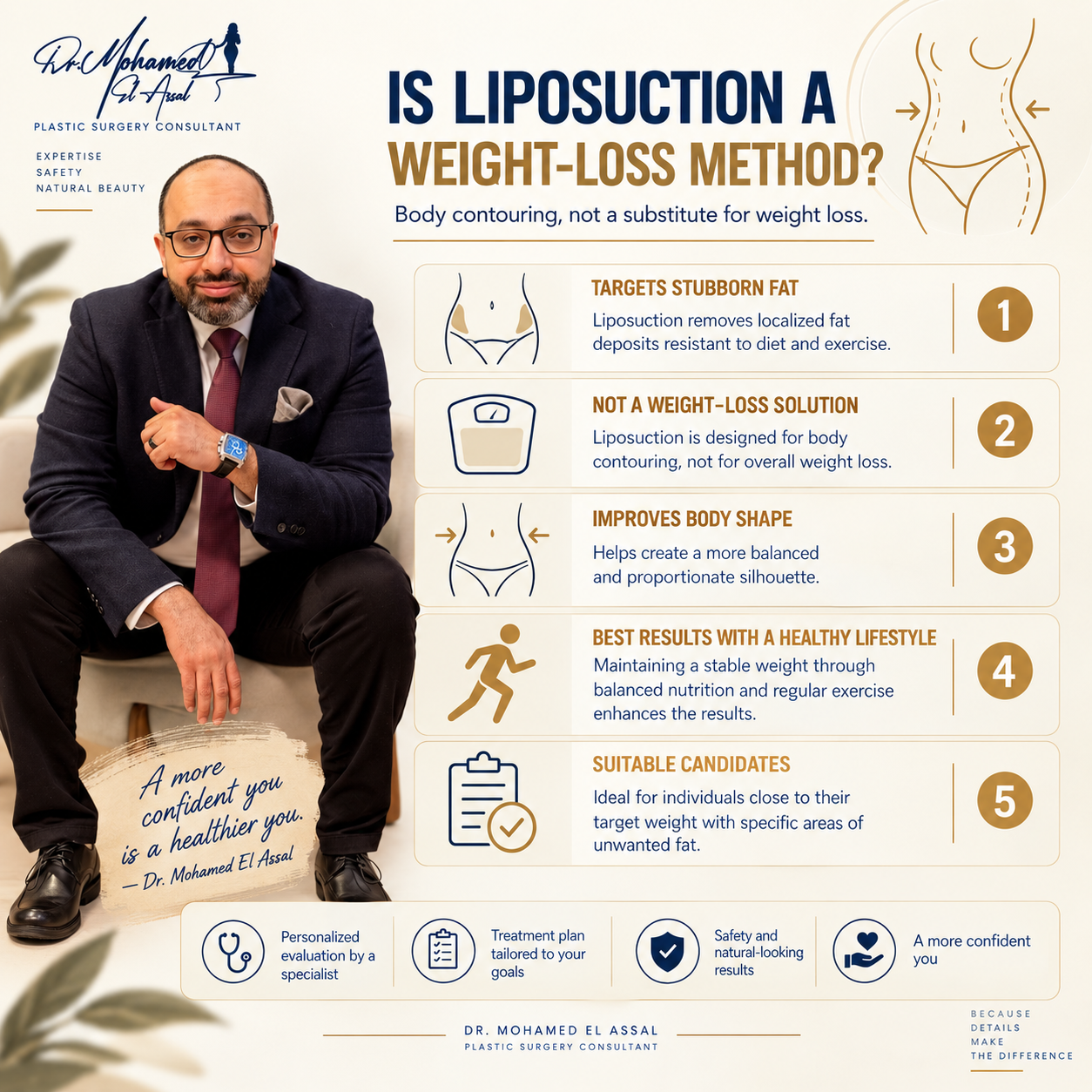
is liposuction a weight-loss method
liposuction for weight loss; does liposuction help you lose weight; liposuction obesity; visceral fat liposuction; subcutaneous fat liposuction; how much fat can liposuction remove; stable weight before liposuction; liposuction weight requirements; body contouring vs weight loss
Is Liposuction a Weight-Loss Method?
Liposuction is not an obesity treatment or a substitute for weight-loss care. Its primary purpose is to remove localized subcutaneous fat and improve the contour of selected areas. The scale may change because tissue is removed, but that does not turn liposuction into a treatment for excess body weight or the health risks associated with obesity.
The distinction also depends on where fat is stored. Liposuction reaches fat beneath the skin in surgically accessible areas; it does not remove deep visceral fat surrounding abdominal organs. The amount that can be suctioned is also governed by individualized surgical safety rather than by how many kilograms a patient would like to lose.
The distinction also depends on where fat is stored. Liposuction reaches fat beneath the skin in surgically accessible areas; it does not remove deep visceral fat surrounding abdominal organs. The amount that can be suctioned is also governed by individualized surgical safety rather than by how many kilograms a patient would like to lose.
Does liposuction make you lose weight or change body shape?
Liposuction can produce some change on the scale because tissue is removed, but its clinical purpose is contour improvement rather than weight reduction as therapy. Mayo Clinic, Cleveland Clinic and ASPS describe it as treatment for localized fat deposits and explicitly distinguish it from overall weight-loss methods or obesity treatment. Shape, not a target weight, guides planning.
Why can measurements change more than the number on the scale?
Liposuction targets fat thickness and contour in a specific region rather than the body's total energy stores. Reducing a bulge at the waist, abdomen or thigh can change circumference and proportion even when the effect on total body weight is comparatively modest. Surgical assessment therefore focuses on contour and tissue quality, not kilograms removed.
Why isn't liposuction used to treat obesity?
Obesity is a chronic health condition involving excess adiposity and associated metabolic and cardiovascular risks, requiring long-term weight and health management. Liposuction removes subcutaneous fat from selected regions but does not treat the causes of obesity, energy balance or visceral fat. Its purpose is therefore fundamentally different from medical or bariatric obesity treatment.
Does removing fat with liposuction improve obesity-related health risks?
Liposuction should not be performed as treatment for metabolic risk. Reviews examining surgical removal of subcutaneous fat report inconsistent metabolic changes and no consensus that cosmetic fat removal provides a reliable therapeutic benefit. It therefore cannot replace weight management or appropriate treatment for diabetes, hypertension, dyslipidemia or other obesity-related conditions.
What is the difference between subcutaneous and visceral fat?
Subcutaneous fat lies directly beneath the skin and is the compartment treated by liposuction. Visceral fat lies deeper inside the abdominal cavity around internal organs. That anatomical difference is crucial: a liposuction cannula works in the subcutaneous layer and does not enter the abdominal cavity to remove visceral fat surrounding the organs.

Can the abdomen still project after abdominal liposuction?
Yes. If abdominal projection is partly caused by visceral fat, abdominal-wall separation or excess skin, liposuction cannot correct all of those components. Examination should identify the source before surgery. A patient with substantial redundant skin or abdominal-wall changes may need a different contouring discussion rather than simply increasing the amount of fat suctioned.
Is there a fixed maximum amount of fat that can be removed?
There is no single safe maximum that applies to every patient. Safety depends on total aspirate, body size, health, treated areas, anesthesia, combined procedures and the surgical facility. Liposuction volume should therefore be individualized rather than planned around a target number of kilograms. Higher-volume procedures require additional safety considerations and monitoring.
What does “large-volume liposuction” mean?
ASPS guidance uses total aspirate - fat plus fluid removed - and defines more than five liters as large-volume liposuction requiring appropriate facility and monitoring precautions. The same professional guidance acknowledges that scientific data do not establish one absolute cutoff that is safe for every body, so the threshold should not be treated as a removal target.
Why can't liters of aspirate be converted directly into kilograms lost?
Aspirate contains both fat and fluid rather than pure fat alone, and body-fluid balance also changes around surgery. The volume collected in the operating room therefore is not a direct equation for kilograms on the scale. Surgeons plan volume around safety, anatomy and contour, not a promised amount of postoperative weight loss.
What weight should you be before liposuction?
There is no single body weight or BMI that determines candidacy for everyone. Professional sources generally describe appropriate candidates as having relatively stable weight, localized fat concerns, good health and suitable skin characteristics. If substantial future weight loss is planned, reducing and stabilizing weight first may provide a more reliable basis for deciding what contouring procedure is actually needed.
Do you have to reach an “ideal weight” before liposuction?
Not necessarily a single theoretical number, but liposuction should not be used to move from obesity or major excess weight to a target weight. Mayo Clinic emphasizes stable body weight with disproportionate localized fat, while ASPS considers weight, health, skin quality, smoking status and goals together. Candidacy is therefore individualized rather than based on one cutoff.
When should weight be stabilized before liposuction?
Weight stability matters when a patient is still actively losing substantial weight, has recently undergone obesity treatment or expects a major change soon. Contouring before those changes settle can leave skin, remaining fat and body proportions evolving after surgery. The appropriate period of stability is not identical for every situation and should reflect the weight-loss pathway and planned procedure.
Why can further weight loss change a liposuction result?
Additional weight loss can reduce the volume of remaining fat and reveal a different degree of skin laxity, while weight gain can enlarge remaining fat cells and alter proportion. The Aesthetic Society emphasizes stable weight for maintaining contour. Planning is therefore more predictable when the likely future weight trajectory is reasonably clear before elective contouring surgery.
What if I need to lose a substantial amount of weight before body contouring?
If the primary goal is substantial weight reduction or obesity treatment, the pathway should begin with medical weight-management assessment rather than liposuction. Depending on health and individual circumstances, care may involve nutrition, activity, medication or other treatments. After weight loss stabilizes, localized fat and excess skin can be reassessed to determine whether contouring surgery has a role.
Is body contouring different after major weight loss?
Yes. After major weight loss, redundant skin and tissue laxity may become more important than localized fat. Skin-removal or lifting procedures can therefore become central to the plan, with liposuction used selectively when appropriate. Wanting a slimmer appearance does not automatically mean that suctioning more fat is the operation that addresses the underlying anatomy.
For related guidance, read Liposuction vs Body Contouring: What Is the Difference?. For independent medical information, see ASPS guidance on body contouring.
For related guidance, read Liposuction vs Body Contouring: What Is the Difference?. For independent medical information, see ASPS guidance on body contouring.
Can liposuction remove deep abdominal or visceral fat?
No. Liposuction works within the subcutaneous fat layer and does not remove visceral fat inside the abdominal cavity around organs. When abdominal fullness reflects a combination of subcutaneous fat, visceral fat, muscle or skin, each component needs separate assessment. Visceral-fat reduction is primarily addressed through weight and metabolic-health management rather than cosmetic suction.
Why is visceral fat more than a cosmetic issue?
Mayo Clinic and scientific reviews describe visceral fat as biologically distinct from subcutaneous fat and more strongly associated with insulin resistance, cardiovascular disease and diabetes risk. Removing a superficial subcutaneous fat layer does not remove those deeper deposits or treat their health implications, even if the external circumference of a treated area becomes smaller.
Can fat come back after liposuction if you gain weight?
Fat cells removed by liposuction are not restored to their previous population, but remaining fat cells throughout the body can enlarge with weight gain and fat distribution can change. Liposuction therefore does not prevent future weight gain. Maintaining healthy habits and relatively stable weight helps preserve contour, while normal aging and other body changes can still alter shape.
Does that mean liposuction results depend only on weight?
No. Skin elasticity, aging, pregnancy, hormonal changes and individual fat distribution also affect contour over time. However, substantial weight fluctuations can meaningfully change proportion after surgery. Liposuction is best understood as reshaping a localized subcutaneous fat layer, not as protection against future fat accumulation or normal changes in the body.
How does a surgeon decide whether you need liposuction or weight loss first?
The decision starts with the goal: localized contour change at a relatively stable weight, or overall weight reduction and obesity treatment. The surgeon then assesses health, fat distribution, possible visceral contribution, skin quality, medications, nicotine use and future weight plans. In some patients, weight management and stabilization should come before elective body-contouring surgery.

Dr. Mohamed El Assal – Expertise
Dr. Mohamed El Assal’s surgical philosophy reflects a firm commitment to patient safety, long-lasting results, and natural-looking body contours. Understanding whether liposuction is a weight-loss method is an important part of setting realistic expectations and helping patients make informed decisions about body contouring procedures. Liposuction is not designed to treat obesity or serve as a substitute for weight loss. Instead, it is a body contouring procedure that targets stubborn fat deposits in specific areas of the body that may not respond easily to diet and exercise. Although liposuction can help improve body proportions and create a more defined silhouette, it is not intended to significantly reduce overall body weight. Particular importance is placed on careful patient assessment, understanding individual goals, and determining whether liposuction is the appropriate option for each patient. His approach emphasizes maintaining a stable weight, following a healthy lifestyle, and understanding the potential benefits and limitations of the procedure. The goal is to achieve smoother, more defined body contours while helping patients distinguish between weight-loss treatments and body contouring procedures, recognize realistic outcomes, and make informed decisions throughout their aesthetic journey.
Frequently asked questions about liposuction and weight loss
Can I lose several kilograms with liposuction?
The scale may decrease because tissue and fluid are removed, but liposuction should not be planned to lose a specific number of kilograms. Total aspirate is not pure fat, and safety determines surgical volume. If your main goal is substantial weight reduction, medical weight-management assessment is the appropriate starting point rather than cosmetic fat removal.
Is liposuction suitable for someone with obesity?
Liposuction is not an obesity treatment. Body-contouring procedures may be considered for selected patients across different weights after individualized assessment, but obesity changes surgical risk and planning and does not make liposuction a weight-loss therapy. When the primary goal is treating excess weight and associated health risks, dedicated weight-management care should be discussed.
Does abdominal liposuction remove visceral fat?
No. The cannula works in subcutaneous fat beneath the skin and does not enter the abdominal cavity to remove visceral fat surrounding the organs. Abdominal projection may therefore persist when visceral fat, abdominal-wall separation or excess skin contributes to the shape. Examination identifies which components liposuction can and cannot change.
What is the maximum amount of fat that can be removed safely?
There is no single maximum that is safe for every patient. ASPS uses more than five liters of total aspirate to define large-volume liposuction requiring additional precautions, while also acknowledging that evidence does not establish an absolute universal cutoff. Health, body size, combined procedures, anesthesia and facility resources all influence the decision.
Should my weight be stable before liposuction?
Relatively stable weight is generally preferred for contouring, particularly if you are planning substantial further weight loss. Weight changes after surgery can alter remaining fat, skin laxity and proportion. There is no universal stability period for every patient; timing should reflect your weight trajectory, health and the specific operation being considered.
If I gain weight after liposuction, will the fat return?
Removed fat cells do not simply regenerate to the previous population, but remaining fat cells can enlarge with weight gain and body-fat distribution can change. Liposuction therefore does not prevent future weight gain. Maintaining a relatively stable weight supports contour maintenance, while aging, pregnancy and other biological changes can still affect shape.
How does Dr. Mohamed El Assal assess the goal of liposuction?
Assessment begins by separating a weight-loss goal from a body-contouring goal. Dr. Mohamed El Assal evaluates subcutaneous fat distribution, excess skin or abdominal-wall changes, weight stability and general health, then explains what liposuction can and cannot change. Safe aspirate volume and realistic expectations are part of planning rather than treating the operation as a kilogram-loss procedure.
For more detail about the procedure itself, explore liposuction, its uses and treatment considerations.
If your primary goal is weight loss, begin with a health-based weight-management assessment. If your weight is relatively stable and localized fat deposits are the concern, a surgical consultation can determine whether liposuction is appropriate and explain the safe, realistic limits of body-contour change.
Internal Links
References
- Mayo Clinic. Liposuction.
- Mayo Clinic. Obesity - Diagnosis and treatment.
- Mayo Clinic. Belly fat in men: Why weight loss matters.
- Cleveland Clinic. Liposuction: What It Is, Surgery, Recovery & Results.
- American Society of Plastic Surgeons (ASPS). Liposuction Candidates.
- American Society of Plastic Surgeons (ASPS). Evidence-Based Patient Safety Advisory: Liposuction.
- American Society of Plastic Surgeons (ASPS). How Much Liposuction Is 'Safe'? The Answer Varies by Body Weight.
- The Aesthetic Society. Liposuction Results.
- Neeland IJ, et al. Different adipose tissue depots: Metabolic implications and effects of surgical removal. 2015.
- Serra MC, et al. Metabolic alterations following visceral fat removal and expansion: Beyond anatomic location. 2013.
- Zhang Y, et al. Features, functions, and associated diseases of visceral and ectopic fat: a comprehensive review. Obesity. 2025.
- Alkhalil M, et al. Metabolic aspects of surgical subcutaneous fat removal: An umbrella review and implications for future research. 2022.
- Chow I, et al. Is There a Safe Lipoaspirate Volume? A Risk Assessment Model of Liposuction Volume as a Function of Body Mass Index. Plast Reconstr Surg. 2015.
- Dr. Mohamed El Assal. Liposuction.