Facelift Recovery Timeline: What to Expect Week by Week
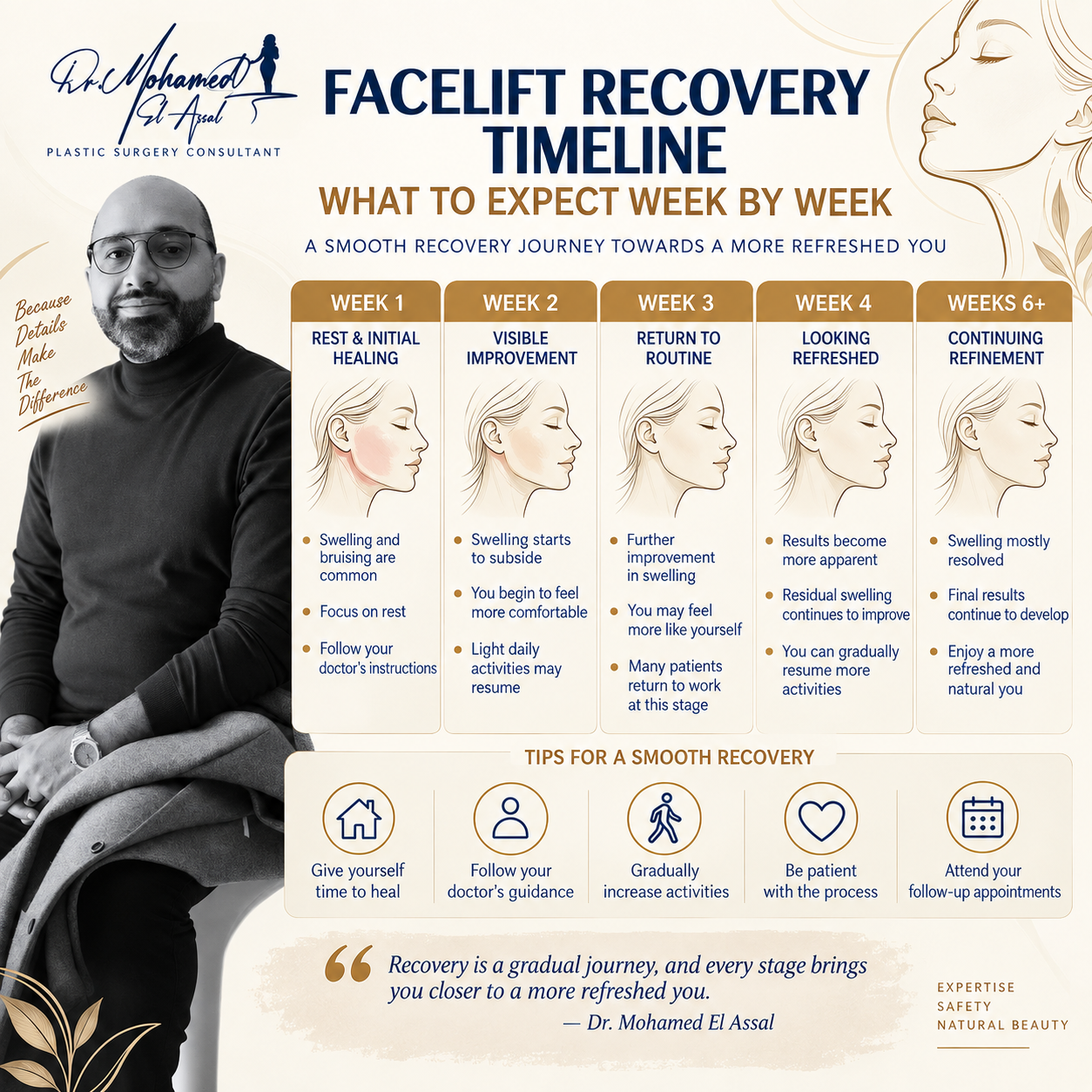
facelift recovery timeline
facelift recovery week by week; facelift recovery time; when can I return to work after facelift; exercise after facelift; facelift swelling timeline; facelift bruising; facelift aftercare; activity after facelift
Facelift Recovery Timeline: What to Expect Week by Week
A facelift recovery timeline varies with the extent of surgery, tissue quality, overall health and any combined procedures. Early recovery focuses on rest, incision care and gentle walking; bruising and swelling then settle progressively as activity increases. Your surgeon’s instructions take priority whenever your individual plan differs from a general week-by-week guide.
This guide focuses on recovery, activity, return to work, driving and exercise. Swelling, tightness or temporary numbness can continue while you are becoming more active, so recovery is not the same as staying completely inactive. The usual goal is a safe balance between early gentle movement and avoiding exertion that may increase blood pressure, swelling or bleeding.
This guide focuses on recovery, activity, return to work, driving and exercise. Swelling, tightness or temporary numbness can continue while you are becoming more active, so recovery is not the same as staying completely inactive. The usual goal is a safe balance between early gentle movement and avoiding exertion that may increase blood pressure, swelling or bleeding.
What should I expect during the first 24 to 48 hours after a facelift?
During the first two days, you may have facial dressings and, depending on the operation, small drainage tubes. Swelling, bruising and a feeling of tightness are expected. You will need someone to drive you home and usually help initially. Follow your surgeon’s specific instructions for incision care, medications, head elevation and follow-up.
Should I stay in bed all day after surgery?
Continuous bed rest is generally not the goal once you are medically stable. Short, gentle walks help restore mobility and reduce risks associated with prolonged inactivity, while bending, lifting and exertion remain restricted. Move slowly and use assistance if anesthesia, medication or dizziness affects your balance. Your surgeon may modify activity based on your procedure.
What happens during the first week of facelift recovery?
The first week usually brings the most visible bruising and swelling, which may peak early before gradually improving. Priorities include incision care, management of dressings or drains when used, head elevation, gentle walking and avoiding bending, heavy lifting and strenuous activity. Follow-up timing and wound-care instructions depend on the operation and your healing.
When are facelift dressings and stitches removed?
Timing varies with the procedure, incision location and closure method. Cleveland Clinic describes dressings being removed within the early postoperative period, while ASPS notes that suture removal depends on the specific operation and healing. Do not remove dressings, drains or sutures yourself unless your surgical team has specifically instructed you to do so.
What should I expect in week two after a facelift?
During week two, bruising and swelling are often still present but usually continue to improve. Temporary numbness, tingling or tightness may remain, while many patients feel increasingly comfortable with light activity. Social readiness and return to work vary with the type of job, residual bruising, the extent of surgery and individual comfort.
Are numbness and tightness normal during week two?
Temporary numbness, tingling and tightness can occur during the first weeks as swelling settles and superficial sensation recovers. Aesthetic surgery guidance notes that altered sensation can persist for several weeks. New facial weakness, worsening pain, sudden asymmetry or another concerning change should be reported to your surgeon rather than assumed to be routine healing.
What happens during weeks three and four after a facelift?
By weeks three and four, visible bruising and swelling have improved substantially for many patients, although mild swelling or tightness can remain. Daily activities and work are often easier. Return to strenuous exercise is less uniform, however, because it depends on surgical extent, wound healing and your surgeon’s assessment rather than the calendar alone.
Can I return to social events during weeks three and four?
Many patients feel more socially comfortable by this stage as obvious signs of surgery fade, but there is no guaranteed event-ready date. Residual swelling, bruising or pink incisions may persist longer in some people. If you have an important event, discuss timing with your surgeon in advance rather than relying on a typical recovery average.
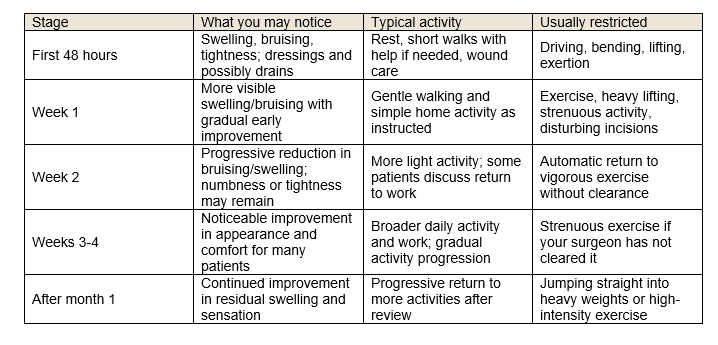
What does a week-by-week facelift recovery timeline look like?
The timeline below is approximate, not a mandatory schedule. Recovery can be faster or slower depending on the facelift technique, combined neck surgery or other procedures, health and individual healing. Any restrictions your surgeon gives you take priority, particularly for driving, work and exercise, because those decisions depend on function and wound healing.
When can I return to work after a facelift?
Cleveland Clinic states that many people after more invasive facelifts return to work in about two to three weeks, while ASPS describes many patients feeling ready near the end of week two. The difference reflects surgical extent, job demands and individual swelling. Plan return to work as an approximate range rather than a fixed date.
Can working from home mean an earlier return?
Working from home may be easier when the job is sedentary and does not require public-facing activity, but fatigue, concentration, prolonged sitting and medication effects still vary. Removing the commute does not remove the need for recovery. If your surgeon permits it, restart gradually and avoid turning home-based work into a reason to overexert yourself.
When can I drive after facelift surgery?
Driving should not be based on a postoperative day number alone. You should not drive while taking sedating medication, feeling dizzy, having restricted neck movement or being unable to react quickly and safely. The Aesthetic Society advises avoiding driving in the early recovery period; your surgeon should clear you based on your actual function.
What practical conditions should I meet before driving?
You should be alert, able to turn your head and neck enough to see traffic and mirrors, capable of an emergency stop without significant pain or hesitation, and free from medications that impair driving. If these conditions are not met or your surgeon has not cleared you, continue using a responsible driver.
When can I exercise after a facelift?
Exercise recommendations vary across reputable sources. Cleveland Clinic advises avoiding strenuous exercise for at least three weeks, while The Aesthetic Society gives more conservative timelines for vigorous activity in some guidance. This is why walking starts early but exercise intensity should increase only after your surgeon evaluates healing and gives individualized clearance.
Why is strenuous exercise restricted early in recovery?
Heavy exercise and lifting can raise blood pressure, increase swelling or bleeding and place stress on healing tissues and incisions. That does not mean complete inactivity: gentle walking is commonly encouraged. The distinction is between low-intensity movement that supports recovery and vigorous exertion that should wait until your surgeon confirms the tissues are ready.
How should I sleep and move during early facelift recovery?
Surgeons commonly recommend head elevation during early recovery to help manage swelling, together with avoiding pressure on surgical areas as instructed. Bending and heavy lifting are also restricted initially. The exact sleeping position and duration vary with surgical extent, so follow the written postoperative plan you received rather than a universal number of nights.
Can I sleep on my side immediately after a facelift?
Side or stomach sleeping is generally not preferred early because it can place pressure on the face and incisions. The Aesthetic Society recommends an elevated position during the early phase and gradual modification afterward. Ask your surgeon when your usual sleeping position is safe rather than choosing a date based only on comfort.
What warning signs should prompt a call to my surgeon during recovery?
Contact your surgeon for a sudden or marked increase in swelling, persistent bleeding, pain that is worsening rather than improving, concerning redness or drainage, fever, new facial movement changes or any symptom that feels unusual. Shortness of breath, chest pain or other emergency symptoms require urgent medical assessment rather than waiting for a routine follow-up.
Does uneven swelling always mean something is wrong?
Swelling may not be perfectly symmetrical during healing, but a sudden increase or clearly enlarging one-sided swelling deserves prompt discussion with your surgeon, especially if accompanied by increasing pain, pressure or color change. Do not try to diagnose a hematoma or fluid collection yourself and do not massage or compress the area unless instructed.
What helps support a safer facelift recovery?
The most useful recovery strategy is adherence to individualized instructions: incision and dressing care, scheduled follow-up, gentle walking, appropriate sleep positioning, avoiding smoking and unapproved exertion, and not changing medications on your own. No method guarantees faster healing, but reporting unusual changes early allows your surgical team to assess them at the appropriate time.
Dr. Mohamed El Assal – Expertise
Dr. Mohamed El Assal’s surgical philosophy reflects a strong commitment to patient safety, long-lasting results, and natural-looking facial rejuvenation. Understanding the facelift recovery timeline and what to expect week by week is essential for setting realistic expectations and helping patients prepare for a smooth healing process. Although initial swelling, bruising, and discomfort are common during the first few days, most patients gradually notice improvements over the following weeks as the tissues heal and facial contours become more defined. His approach emphasizes personalized recovery plans, proper postoperative care, natural-looking results, and regular follow-up appointments to help patients achieve optimal healing and long-lasting results safely and effectively.
Frequently asked questions about facelift recovery
How long is facelift recovery?
Visible bruising and swelling improve substantially during the first few weeks for many patients, and Cleveland Clinic notes that they commonly last about two to three weeks. Feeling completely back to normal can take longer. Surgical extent, health and individual healing all change the timeline, so recovery should be judged at follow-up.
When can I return to work after a facelift?
Many patients having a traditional or more invasive facelift need roughly two to three weeks before returning to work, while some feel ready near the end of week two. Job demands matter: physical work or highly public-facing roles may require more time. Plan your return with your surgeon rather than using one universal date.
When can I exercise after a facelift?
There is no single timeline across all sources. Cleveland Clinic recommends avoiding strenuous exercise for at least three weeks, while other aesthetic surgery guidance uses a longer interval for vigorous activity. Gentle walking usually begins earlier. Increase intensity and weights only when your surgeon has examined your healing and specifically cleared progression.
Are swelling and bruising normal after a facelift?
Yes. Swelling and bruising are expected after facelift surgery and are often most noticeable early before gradually improving. However, sudden enlargement, marked one-sided swelling, persistent bleeding or increasing pain should not simply be watched at home. Contact your surgeon so the change can be assessed and the appropriate next step determined.
When can I wash my hair or wear makeup after a facelift?
Timing depends on your incisions, dressings and closure method. Some Aesthetic Society guidance allows gentle hair washing relatively early, while makeup should wait until your surgeon says it is safe. Do not apply cosmetics over or close to healing incisions on your own; ask at follow-up what is appropriate for your wound stage.
Can I travel immediately after a facelift?
Travel requires individual planning because early postoperative follow-up is important and long periods of sitting may create additional concerns. Feeling well is not enough to set a departure date. Discuss travel before surgery, especially for long flights or trips that would take you far from your surgical team during the early recovery period.
How does Dr. Mohamed El Assal guide facelift recovery?
Dr. Mohamed El Assal tailors postoperative instructions to the extent of face and neck surgery, combined procedures and the patient’s health, then reviews wounds, swelling and activity during follow-up. Return to work, driving and exercise is not determined by a timeline alone; it is adjusted according to actual healing and findings on examination.
CTA: If you are planning a facelift, discuss your work, travel, exercise and family responsibilities with Dr. Mohamed El Assal before surgery so you can build a realistic recovery plan. If you are already recovering and notice an unusual symptom, contact your surgical team rather than relying on a generic timeline or another patient’s experience.
CTA: If you are planning a facelift, discuss your work, travel, exercise and family responsibilities with Dr. Mohamed El Assal before surgery so you can build a realistic recovery plan. If you are already recovering and notice an unusual symptom, contact your surgical team rather than relying on a generic timeline or another patient’s experience.
Internal Links
• Face Lift — https://drmohamedelassal.com/service/face-lift/
References
Mayo Clinic. Face-lift. https://www.mayoclinic.org/tests-procedures/face-lift/about/pac-20394059
Cleveland Clinic. Facelift (Rhytidectomy): What Is It, Recovery & What to Expect. https://my.clevelandclinic.org/health/treatments/11023-facelift
Cleveland Clinic Cosmetic & Plastic Surgery. Facelift (Rhytidectomy). https://my.clevelandclinic.org/cosmetic-plastic-surgery/procedures/facelift
American Society of Plastic Surgeons (ASPS). Facelift Recovery. https://www.plasticsurgery.org/cosmetic-procedures/facelift/recovery
American Society of Plastic Surgeons (ASPS). Your facelift recovery explained from Day 1 to Day 30. https://www.plasticsurgery.org/news/blog/your-facelift-recovery-explained-from-day-1-to-day-30/
The Aesthetic Society. Facelift Surgery Recovery & Aftercare. https://www.theaestheticsociety.org/procedures/head-face/facelift/aftercare-recovery
The Aesthetic Society. Plastic Surgery Recovery Checklist. https://www.theaestheticsociety.org/patient-resources/aftercare-recovery/checklist
Botti C, Botti G, Pascali M. Facial Aging Surgery: Healing Time, Duration Over the Years, and the Right Time to Perform a Facelift. Aesthetic Surg J. 2021. https://pubmed.ncbi.nlm.nih.gov/34337655/
Dr. Mohamed El Assal. Face Lift. https://drmohamedelassal.com/service/face-lift/
Medically reviewed by Dr. Mohamed El Assal, Consultant Plastic Surgeon