Safety Priorities in Body Contouring Surgery – What You Must Know Before Proceeding
What Is Body Contouring Surgery?
Body contouring encompasses a broad spectrum of procedures including liposuction, abdominoplasty, thigh lift, and brachioplasty. These surgeries aim to remove localised fat deposits and, where indicated, excess skin to reshape the physique.
Who Is NOT a Candidate for Body Contouring?
Not all who desire body contouring are suitable candidates. Cases requiring deferral or refusal include: morbid obesity with very high BMI (requiring weight loss first), uncontrolled diabetes, coagulation disorders, unstable cardiac disease, heavy smoking without adequate cessation before surgery, and unrealistic expectations.
Pre-Operative Patient Assessment – The First Priority
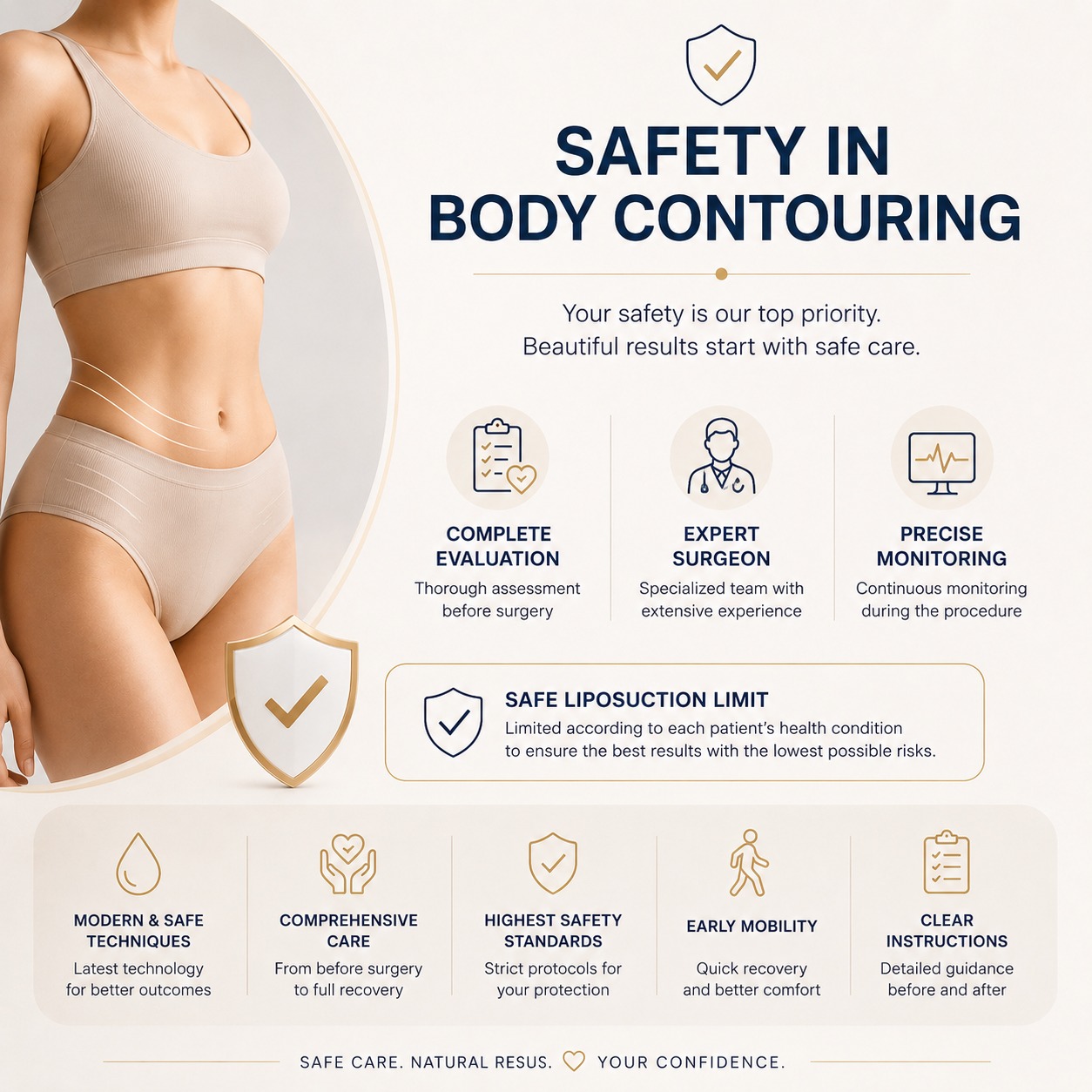
Safety begins before the operating theatre. Comprehensive assessment includes BMI measurement, chronic disease history, fat distribution evaluation, and pre-operative investigations to exclude contraindications.
Intraoperative Safety Protocols
The volume of fat safely removable varies between patients and is determined by individual medical assessment, general health, and the surgical centre's protocols — not a universally fixed number. Safety encompasses: continuous pressure monitoring, compression stockings for DVT prevention, and anaesthesia managed by a qualified anaesthesiologist in a fully equipped hospital or surgical facility.
How to Choose a Safe Hospital or Centre
Ask about: facility accreditation and emergency readiness, anaesthesia team experience, DVT prevention protocol, and post-operative follow-up arrangements. The difference between a fully equipped hospital and an unprepared private clinic is significant.
Common Complications and Prevention
Notable potential complications include DVT, fluid imbalance, skin irregularities, asymmetry, and fibrosis. These are substantially reduced by early ambulation, adequate hydration, compression garment use as directed by the surgeon, and adherence to the follow-up schedule.
Safe Recovery
Adherence to post-operative instructions is fundamental to a safe and aesthetically successful outcome. Avoid strenuous activity for the period specified by the surgeon, maintain a balanced diet, and stabilise your weight to preserve long-term results.
Dr. Mohamed El Assal – Expertise
Dr. Mohamed El Assal places the highest priority on selecting the appropriate surgical candidate before any body contouring decision. His comprehensive assessment includes a thorough clinical evaluation, identification of contraindications, and performance of procedures in fully equipped medical facilities with a specialist anaesthesia team and clear protocols for DVT prevention and post-operative follow-up.
Frequently Asked Questions
Is body contouring surgery safe?
Yes, when performed by a qualified surgeon, in an equipped facility, on a properly evaluated patient.
Is there a fixed limit on how much fat can be removed?
No. The safe volume is determined by individual assessment, not a universal fixed number.
Does smoking increase complications?
Significantly. Cessation for at least 4–6 weeks before and after surgery is generally recommended.
What pre-operative tests are required?
Typically: complete blood count, liver and kidney function, coagulation profile, ECG, and others as indicated.
Can I go home the same day?
Depends on the type and extent of surgery. Limited procedures may allow same-day discharge; larger ones require an overnight stay.